Tackling the rise of non-compliant steel buildings in the marketplace

Building-Collapse

RIDBA is increasingly concerned about a growing trend presenting both commercial and safety challenges for the steel building sector.

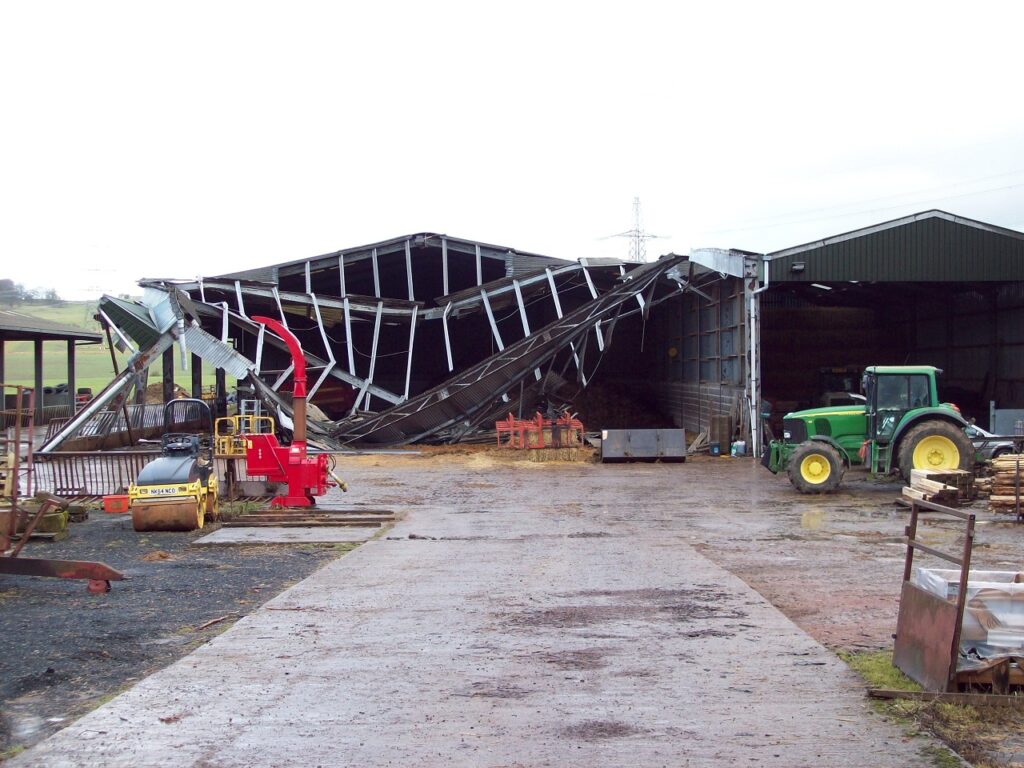
There has been a noticeable rise in steel kit buildings being advertised and sold through auction platforms without appropriate CE or UKCA marking, despite this being a legal requirement for structural steel products placed on the UK market.

While these buildings may appear attractive from a cost perspective, many are entering the market without the certification necessary to demonstrate compliance with BS EN 1090 and associated regulations. Without verified assurance of structural performance and safety, what initially appears to be a bargain could expose purchasers to significant financial, legal and safety risks.

In response, RIDBA has established a dedicated working group focused on understanding the scale of the issue, engaging with stakeholders and identifying opportunities for RIDBA members within a market increasingly distorted by non-compliant alternatives.

RIDBA is also continuing to work with Dorset Trading Standards to identify and investigate suspected cases of non-compliance across the UK. However, the nature of online and national auction platforms means the challenge extends well beyond local enforcement activity alone.

Encouragingly, RIDBA maintains an active dialogue with the Office for Product Safety and Standards (OPSS), which recognises this as a genuine and growing concern within the sector. As part of this ongoing engagement, RIDBA has recently responded to an OPSS survey seeking industry feedback on compliance with BS EN 1090 and wider enforcement challenges.

These discussions represent an important step towards a more coordinated approach to market oversight and enforcement, and RIDBA remains committed to working collaboratively with regulators and industry partners to uphold standards across the sector.

RIDBA will continue to advocate for fair competition, stronger enforcement and improved compliance throughout the industry.


For anyone considering purchasing a steel building, the message remains clear: choose compliance, choose quality, choose a RIDBA member.

RIDBA welcomes six new businesses

RIDBA new members

RIDBA welcomes six new members to the association

RIDBA is pleased to welcome six new members to the association.

These new members reflect the diversity and strength of RIDBA’s growing membership, and we’re excited to support their growth in the agricultural and industrial buildings industry.

New members

RIDBA chairman Simon Pelly said: “Each new member brings valuable expertise and fresh perspectives, and we look forward to working together to uphold the highest standards across the sector.”

RIDBA members are supported with expert guidance, training, support and knowledge while representing their interests and that of the wider industry.

Click here to find out more about joining.

Click here to view the full list of members.

Wallington Farms’ Latest Grain Store Aids Efficient Management

Wallington Farms’ Andrew Watts is responsible for 2,500 hectares of farmland in north Hertfordshire. He is an arable crops specialist who has advised the European Union as chair of the Seeds Advisory Committee to the Directorate-General for Agriculture and Rural Development, is a former board member of BASIS Registration, which inspects agrochemical standards, and also ex-chair of the NFU’s combinable crops committee.

A repeat customer of Shufflebottom buildings – “six of the seven new buildings we have installed in the last few years” – Mr Watts’ latest, is a grain store at Bygrave Lodge, Baldock. The 3.6 metre surcharge fill store is 48 metres long and 24 metres wide, and has a hot dipped galvanised frame, steel spill plates and fibre cement eaves closures.

The new store brings on-farms’ storage capacity up to 10,000 tonnes, enabling crops to be stored in accordance with optimal management and marketing schedules. With cooling through horizontal pipes or vertical pedestals, the stored crops are maintained in top condition. Location close to a main road means that lorries can be loaded in a few minutes, speeding dispatch. Eco features include a rainwater harvesting programme, now just awaiting storage tanks, and photovoltaic panels on the roof of an earlier grain store.

The wheat, barley, oilseed rape, peas, beans and oats produced by Wallington Farms are destined for mostly local processing, which minimises transport. “For example, most of the oats go to Bedford and the winter barley to a local maltings, through North Herts Farmers ,” said Mr Watts. These established relationships with processors should be an advantage post-Brexit. “The domestic market will remain,” said Mr Watts. “People will need flour and bread and all the arable crops we produce.”

Wallington Farms’ confidence in the future is reflected in the choice of Shufflebottom buildings. “We have chosen Shufflebottom because of the quality of construction,” Mr Watts said. “Also we deal with the same site surveyor, and the construction team does the whole job from start to finish. We have built up a good rapport with the company.”

Shufflebottom Director, Alex Shufflebottom, explains that the company constructs grain stores of any and all sizes, each one to suit customers’ exact requirements. “Our business is all about providing exactly what our customers want,” she says.