IAE to host factory tour for RIDBA members; AGM

20220615blue_earth53-Edit-scaled

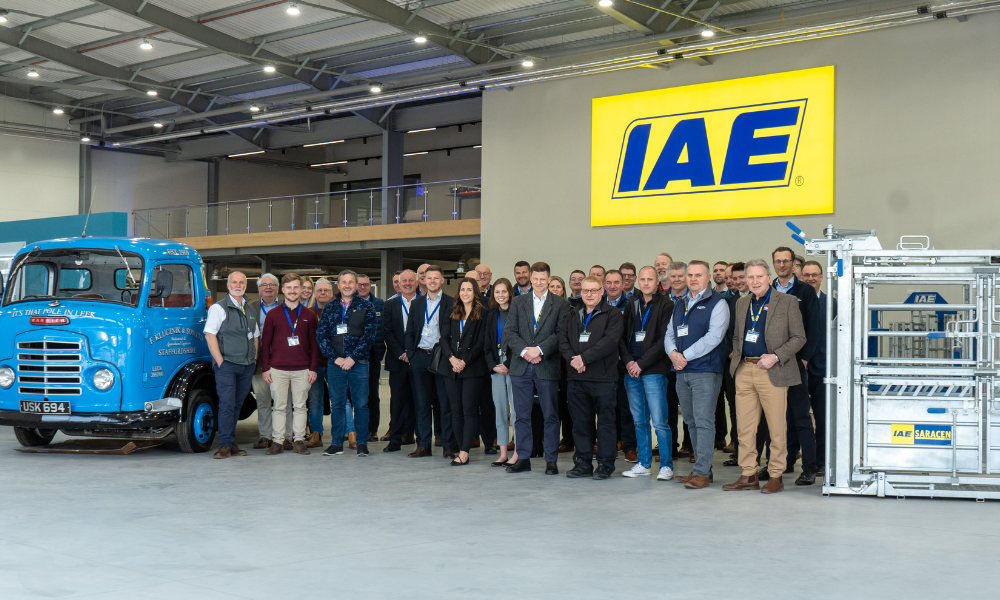
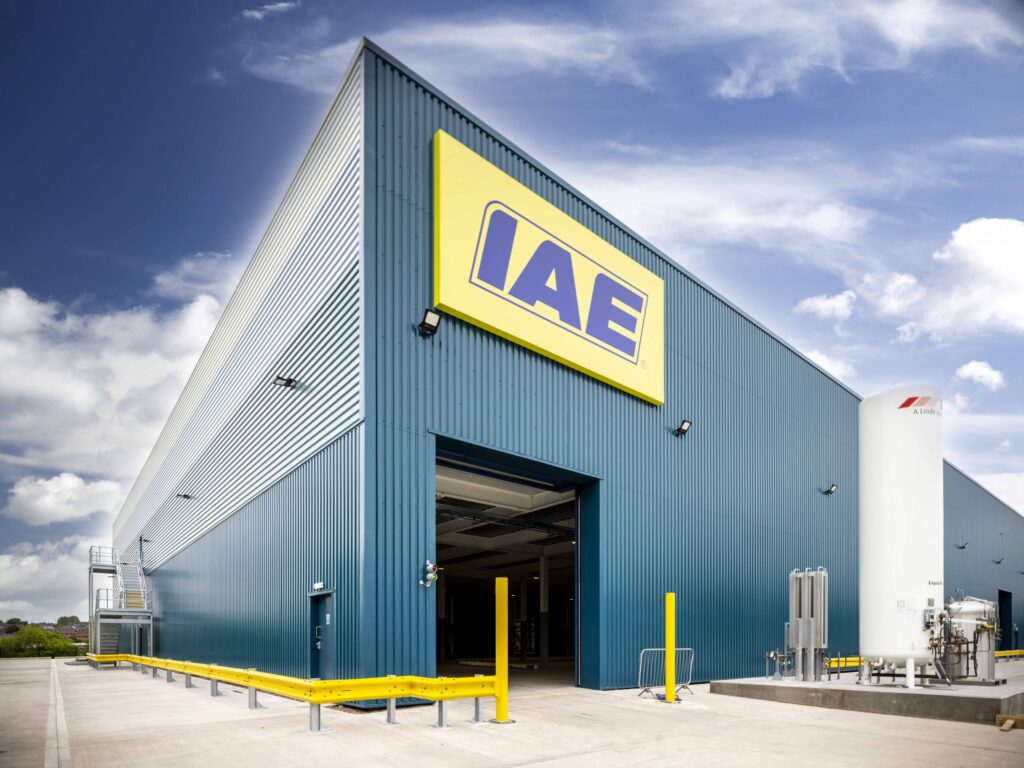
IAE will open the doors of its new base this spring when it hosts its fellow RIDBA members for an exclusive tour.

Members will be able to visit the Staffordshire company on April 20, when it will also host RIDBA’s AGM.

It’s a great opportunity for members to visit the impressive multi-million-pound facility in Stoke-on-Trent which was completed in summer 2022.

It is home to the manufacturing of all IAE’s steel fencing, as well as bespoke steel fencing and agricultural products.

The day will begin at 9.15am with an open board meeting open to members and board members before the AGM and presentations begin at 11.45am.

Following an hour break for lunch at 12.45pm, the factory tour will get underway at 1.45pm, finishing approximately at 3pm.

Read more about the factory here.

RIDBA Building Awards 2023 sponsors revealed

CA20335-scaled-e1675163573529

RIDBA Building Awards sponsors revealed

AJN Steelstock is the headline sponsor of September’s RIDBA Building Awards.

Premium sponsors Joseph Ash Galvanizing, Barrett Steel and STRUMIS, and event sponsors Steadmans and Kingspan will also support the black-tie event.

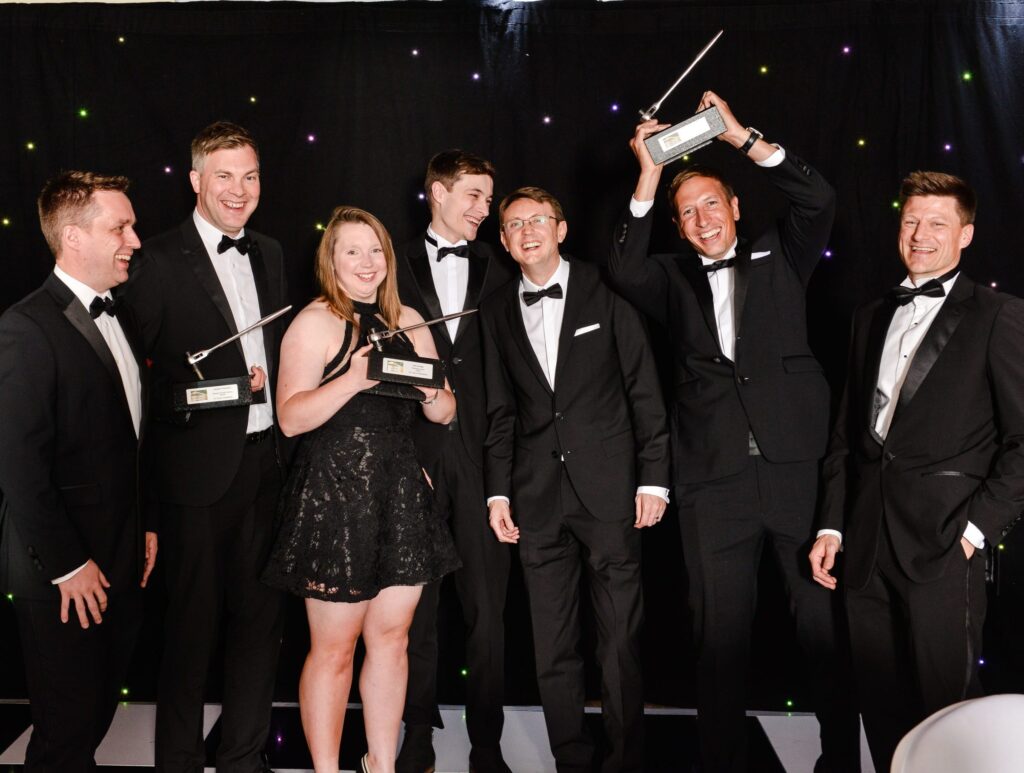
RIDBA members can enter their projects into the awards and put themselves in with a chance of winning a trophy.

The eight categories open to entries are:

  • Commercial award
  • Farm storage award
  • Industrial and production award
  • Livestock award
  • New product or service award
  • Outstanding workmanship award
  • Training award

Enter all the categories here.

A ceremony at the Graduate Hotel, in Cambridge, on Friday, September 22 will reveal the winners.

Click here to book tickets to the event or a room at the hotel.

Read about the RIDBA Building Awards 2021 here.

Members enjoy factory tour

Shufflebottom_Head_Office

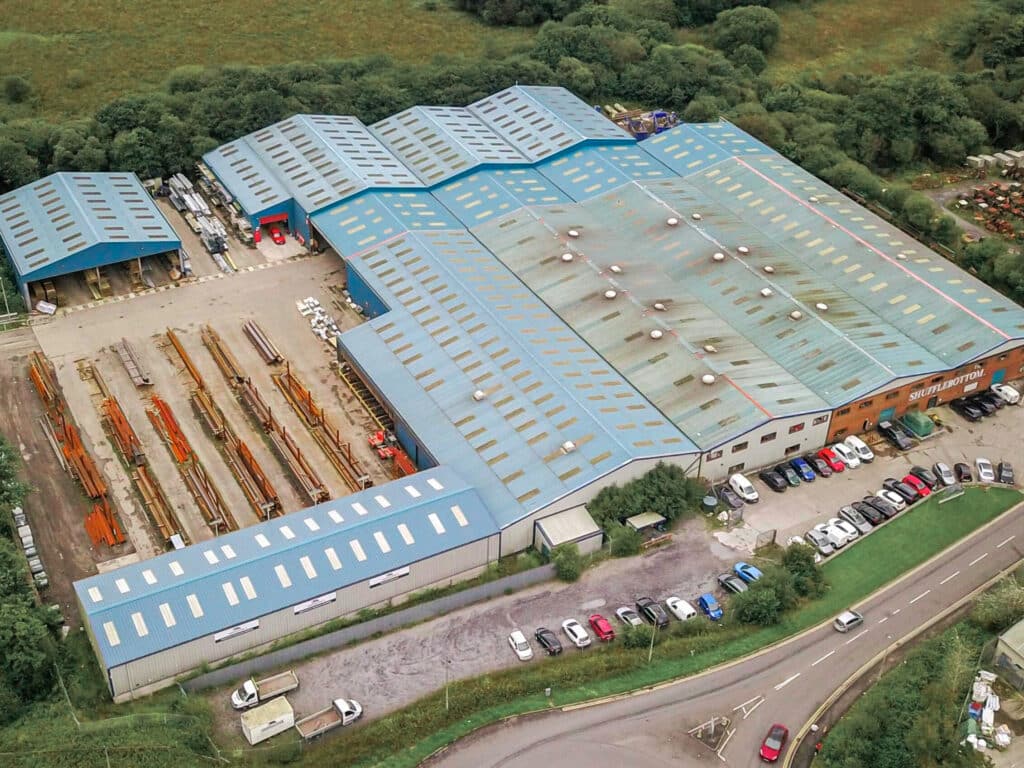
RIDBA members were greeted with open arms during a visit to their fellow member Shufflebottom earlier this month.

Director Alex Shufflebottom gave an insightful talk on the history of the Llanelli-based and spoke about its recent investments in its production process and people.

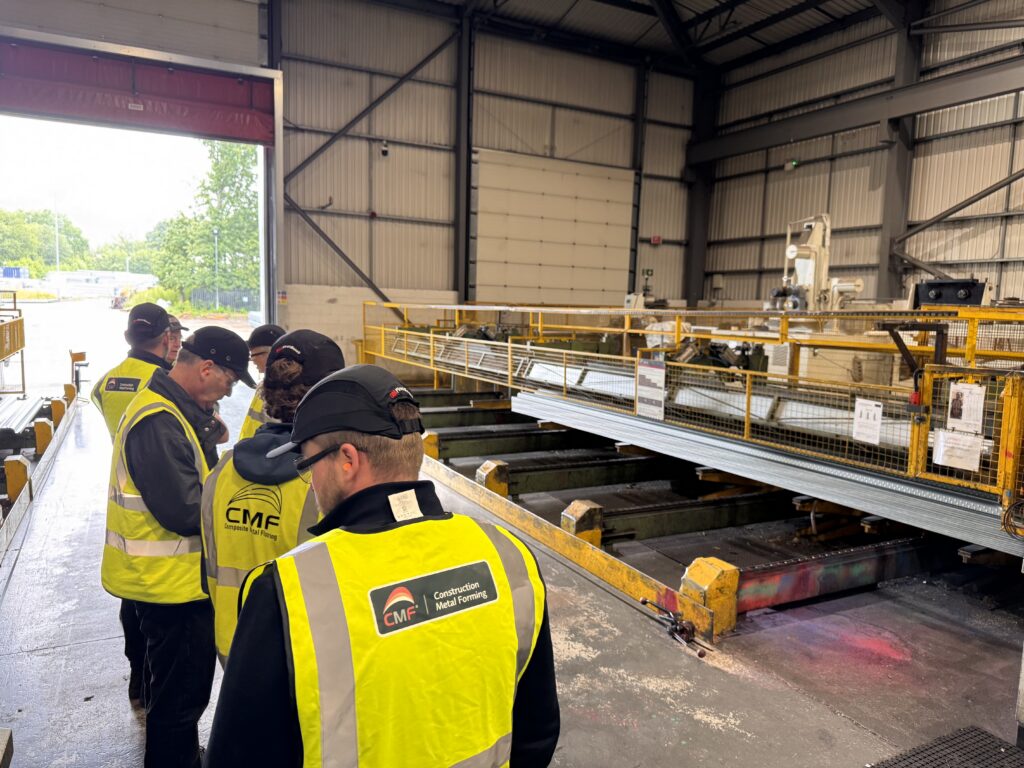
Following the talk, a tour of the factory took place before the group held a discussion on the current challenges facing the industry such as labour and costs.

The group of nearly 20 attendees then enjoyed a meal at a nearby restaurant.

RIDBA general manager Joe Chalk said: “Thank you Alex for hosting the day and to the whole Shufflebottom team for being so welcoming and taking the time to talk us through their roles.

“Thank you too to Clive Mander for his help with the preparations.

“It was great to see so many members make the journey to Llanelli – the feedback we’ve had on the day has been really good and will prove useful when it comes to planning future RIDBA events.”

Bookings for ‘fascinating’ tour of factory set to close

07-Shufflebottom-Logo-Page-19

RIDBA members are running out of time to book their spot on a tour of the factory of Shufflebottom.

Shufflebottom is an award-winning company which specialises in steel-framed buildings and structural steelwork and has built more than 15,000 structures across the UK.

The RIDBA member was established in 1986 with the second generation of Shufflebottom’s – Alex and Wesley – becoming directors in 2008, alongside general manager Alec Davies.

Alex Shufflebottom said: “We’re looking forward to welcoming members to our base in Llanneli. Following an introduction to the company’s history, we’ll be taking members through each stage of our manufacturing process.”

The tour will begin at 3pm on Thursday, September 8 and will be followed by a meal at The Plough, in Llandeilo, a short drive from Shufflebottom.

Joe Chalk, RIDBA general manager, said: “My thanks to Alex and the team at Shufflebottom for agreeing to host a tour. I’m sure it will be a fascinating visit and a fantastic opportunity for members to catch up!”

Bookings close on Thursday, September 2. RIDBA members can secure their places by emailing [email protected].

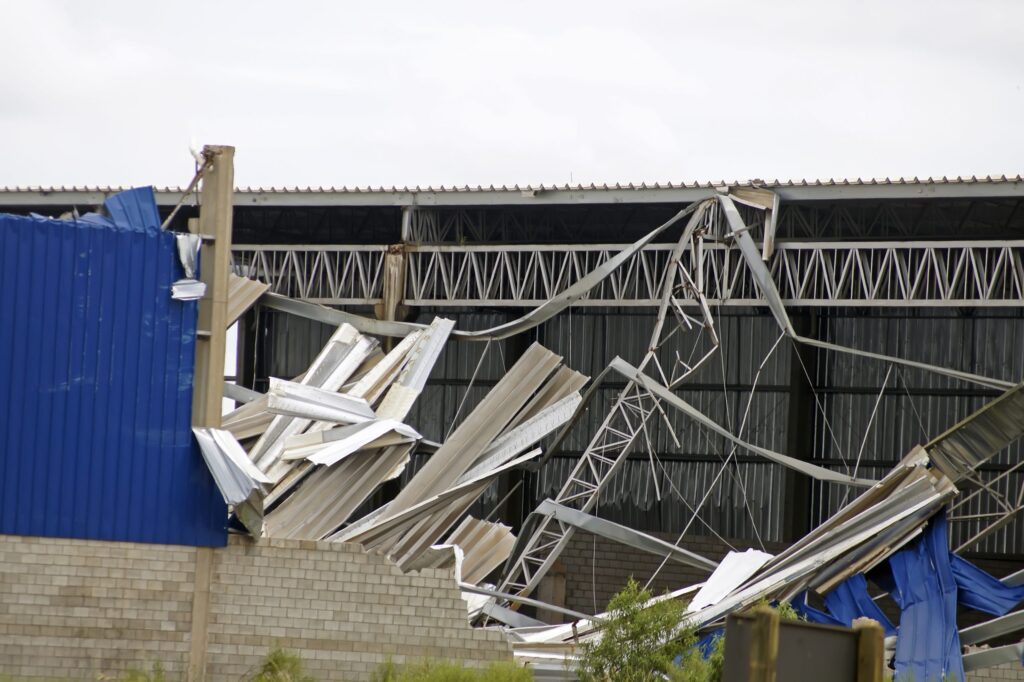
Designing buildings to withstand winter storms: Part II

Page-8-scaled

In the previous issue of the RIDBA Journal I wrote about wind loading on buildings and how to design with it in mind.

The article considered the many factors that affect the speed of the wind as it approaches a building, or other obstruction, and the need to perform bespoke wind loading calculations for each building. The article also referred to the Eurocode standard for wind loading – BS EN 1991-1-4 – and the availability of wind loading software. In this second article, the focus switches from the wind to the buildings and considers how the structural frame, cladding and attachments can be designed to withstand the winter storms.    

The structural frame

All structures, including buildings, must be designed with sufficient stability to withstand horizontal forces, such as wind loading, without collapse or excessive deflection. The means of providing this stability will depend on the type of building and any constraints placed on the structure by the building use. For example, the need for a clear opening without bracing. Resistance to horizontal forces is generally achieved through one of the following methods:

  • Bracing system
  • Concrete core or shear wall
  • Moment-resisting connections  

Of these options, the use of a bracing system is probably the most common in multi-storey buildings or in single storey buildings where large clear openings are not required. Cores and shear walls tend to be used in tall buildings where bracing would be obtrusive and where a service core already exists for the lifts and a stairwell. Moment-resisting connections are used where clear openings are needed in buildings and where a core or shear wall would be impractical, such as warehouses and agricultural buildings. Portal framed buildings typically combine two means of stability. In the plane of the portal frames, wind loading is resisted by the hunched connections between the columns and the rafters, while bracing in the walls provides the resistance out of plane. 

It is worth emphasising that the bracing system, where it is used, is as important as any of the other structural members in the frame. Bracing members are not optional extras that farmers can remove to make a side entrance to their cow shed.  If a bracing member needs to be moved, a qualified structural engineer should be consulted to ensure that an alternative means of stability is provided.

The bracing and haunches prevent the building from collapsing sideways, but what about the whole building overturning or lifting off the ground? This is the job of the column bases and their holding down bolts, although from the way they are often treated on site, one could be mistaken into thinking they are little more than ornamental features.

A typical column base consists of a steel plate, known as the base plate, welded to the base of the column, and connected to the concrete foundation by four holding down bolts. Although two holding down bolts are likely to be adequate to resist the design loads, four should always be used for the sake of safety during erection. When the wind blows on the side of the building, it simultaneously attempts to move the building sideways and overturn it. This overturning moment is resisted by a downward reaction on one set of columns and an upward reaction on the other side of the frames. Consequently, column bases need to be designed to carry upward and downward vertical loads in additional to horizontal base shear.

Downward vertical loads are taken directly into the ground in compression, with the base plate spreading the load to limit the pressure on the concrete foundation. Vertical uplift loading is taken in tension through the columns into the holding down bolts and is ultimately resisted by friction between the foundation and the surrounding soil. Horizontal loads are taken into the foundations by the bolts acting in shear. The holding down bolts should be specified to resist the uplift on the column base in tension and to transfer the horizontal forces in shear. The size of bolt will depend on the magnitude of these forces, but M20 is typical for small and medium size sheds. Remember that any column base is only as good as the foundation to which it is attached, so take great care to ensure the foundations are adequate to hold the building down in the event of a storm.

The final structural issue to consider is the impact of wind uplift on portal frame rafters, which in some cases can be the dominant design condition. Moreover, due to their slenderness, the rafters are usually susceptible to lateral-torsional buckling and have to be restrained at regular intervals along their length. Under downward loading (e.g., self-weight and snow), the critical compression flange is mostly at the top of the rafter (it is at the bottom close to the haunch), so is directly restrained by the purlins. Under wind uplift, however, the opposite is true and, unless correctly detailed, the compression flange will be unrestrained and at risk of buckling.

The building envelope

So far, this article has only considered the impact of the wind on the building structure, but quite often it is the building envelope and decorative elements such as fins, awnings and signs that bear the brunt of any storm. While these items are not normally classed as structural, i.e. their failure will not result in the collapse of the building, they are often essential to the serviceability of the building and their detachment from the building can be extremely dangerous (think of thin metal sheets flying through the air). Designing the roof, wall cladding and any attachments for the appropriate wind loading is therefore as important as designing the structural frame.

Building designers will often assume that the wind loading is shared across the whole building when designing the structure, but this approach is not valid when it comes to the building envelope due to the significance of local wind forces. Although it is reasonable to assume that the wind blowing towards a building is uniform, once it reaches the building and begins to flow over and around it, the wind pressures can vary enormously from one location to another. This variation in wind pressures is dealt with in the design codes using ‘wind zones’.

Large signs, light fittings and any other wall-mounted attachments require special consideration, since the wind force will need to be taken into the cladding and then back into the structure.  This poses two potential problems. Firstly, the bracket or rail system supporting the attachment must be strong enough to safely transmit the wind load, which in some cases could be significant. Secondly, where these brackets attach to the cladding system, there will be a concentrated local force on the cladding. If the connection is not detailed correctly, this could result in local failure of the cladding.  It is always advisable to contact the cladding manufacturer for specialist technical guidance in these circumstances. 

Conclusion

Storms can release great destructive power, which all too frequently causes damage to buildings. This is, however, largely avoidable if building designers take the time to calculate the wind loading on the building and correctly detail the structure and envelope to ensure that the structure is adequately braced and held down and that the cladding is securely fastened to the structure.

Dr Martin Heywood
RIDBA Technical Consultant
UKCA webinar arranged exclusively for RIDBA members

BM-Trada

Following requests from RIDBA members, certification experts BM Trada will deliver a webinar on UKCA marking and the changes you need to be aware of prior to implementation in January 2023.

This online event will take place on July 5 via Zoom. RIDBA members can register for free here.

UKCA (UK Conformity Assessed) marking is a new UK product marking that is used for goods being placed on the market in Great Britain (England, Wales and Scotland).

The UKCA mark was introduced on January 1, 2021, however, to allow businesses time to adjust to the new requirements, CE marking can be used in most cases until December 31, 2022.

Once the webinar has finished, there will be a short Q&A session.

Ahead of the webinar, RIDBA will host an EGM to adopt its new code of practice.

As part of RIDBA’s development, the Board has undertaken a review of its code of practice to ensure it reflects where the association is today, and so members are aware of expected standards.

Notice of the EGM and a draft copy of the new code of practice will be distributed to members on June 14.

Review: RIDBA Industry Day 2022

Thank you to everyone who attended, spoke at and sponsored RIDBA’s Industry Day. It was a fantastic event and good to see so many members enjoy the day at the Abbey Hotel in Malvern.

The day began with RIDBA’s AGM, before livestock consultant Jamie Robertson delivered a talk on the design of livestock buildings for an environmentally ethical future.

Michael Worth, of Joseph Ash Galvanizing, spoke on the importance of galvanizer safety, before Clive Jennings, from recruitment platform Talentview, explained how RIDBA members could benefit from using the site.

Citation’s Adrian Brine delved into how mental health can be managed in the workplace, before RIDBA’s Martin Heywood brought the talks to an end with his technical update.

Members then headed to the nearby Morgan Motors factory for a tour.

Thank you to headline sponsor Briarwood, as well as Ayrshire Metals, Joseph Ash Galvanzing, Citation, Kingspan and STRUMIS for their support.

Members can access a copy of the 2022 AGM minutes by emailing [email protected].

Russian invasion of Ukraine exacerbates high prices and long lead times

Page-8-construction-scaled

Steel producers say the Russian invasion of Ukraine is to blame for recent price increases and extended lead times.

British Steel has hiked the price on steel sections by £250 per tonne, blaming the war for disruption to trade and high levels of volatility in the prices of energy and commodities.

Furthermore, the firm has said it will only be releasing booking capacity in the first two weeks of April, for production to April 16. After that, prices could rise again.

It comes as prices and lead times were already higher and longer than usual as a result of the pandemic.

The director of one RIDBA member has advised the association that one of their orders has been pushed back to 2023.

Costs relating to steel plates have also risen with prices going from around £1,000 per tonne to £1,400 per tonne.

Meanwhile, some firms are highlighting issues around supply with some steel mills refusing to take orders.

Both Ukraine and Russia produce steel billets which are used as raw feedstock.

In the latest Construction Leadership Council statement, it has been suggested that “sanctions against individuals with links to the regime in Russia and firms with Russian ownership may affect the UK supply chain.”

RIDBA welcomes the thoughts of its members on this important issue. Email [email protected].

Industry Day programme announced

The-Abbey-Hotel-2

RIDBA has published its programme of insightful presentations lined up for the Industry Day on April 21, 2022.

This popular event will include talks from expert speakers on subjects such as mental health, keeping your galvanizer safe and recruiting staff. There will also be exclusive updates from RIDBA’s technical and livestock consultants. Please click here to view the programme.

The event is fast approaching and lots of members have already registered to attend. It is the perfect opportunity to learn, network and develop, so don’t miss out. To register, please complete and return the booking form, here.

During networking breaks guests will have the opportunity to catch up with industry colleagues, suppliers and sponsors. RIDBA would like to thank Briarwood (headline), plus Ayrshire Metals, Joseph Ash Galvanizing, Kingspan and STRUMIS for their support in sponsoring this event.

The event will take place at the Abbey Hotel in Malvern, Worcestershire, and will conclude with a tour of the nearby Morgan Motors factory.

The RIDBA Industry Day is scheduled for April 21, 2022. To book your tickets, please complete and return the booking form, here.

Jo Caulfield to host RIDBA Building Awards

RIDBA is delighted to announce that comedian and writer, Jo Caulfield, will host this year’s RIDBA Building Awards.

Jo has worked on some of the biggest shows and with some of the biggest names in British comedy. She has appeared on programmes such as Have I Got News For You, Mock The Week and Never Mind The Buzzcocks.

RIDBA’s flagship event will take place at the Macdonald Hotel, in Manchester, on Thursday, September 30. Please click here to view the shortlisted companies.

RIDBA would like to take this opportunity to thank its event sponsors AJN Steelstock, Joseph Ash Galvanizing, Kingspan, Steadmans, Hadley Group, Eternit, STRUMIS and our media partner, Farming Monthly.