What Building Occupiers, Owners and Managing Agents Need to Know About Their Responsibilities
Definition of a Fragile Roof
A roof must be considered fragile if it, or the materials forming it, will not take a person’s weight.
This includes, old roof lights (possibly over painted), fibre and asbestos cement sheets, old or thin metal sheets, all glass panels, slates and tiles in poor condition.
If you are unsure then you must always treat a roof as thought it is a fragile roof.
Steps to Take to Meet Your Responsibilities
Assume any roof is fragile unless you can prove it is not.
Do not go onto a roof or allow anyone else onto the roof without the correct training, experience, and suitable safety equipment.
Engage a specialist roofing company who have the training, experience, and correct equipment to access the roof safely. The RIDBA website charlesd133.sg-host.com offers a direct link to such specialists near you.
Tasks such as clearing low level gutters, and unblocking downpipes can be done from the ground level, from a Mobile Elevated Work Platform (MEWP) or, for very short duration work (30 mins max), a properly secured, footed and tied-off well-maintained ladder.
Ultimately, it is your responsibility to ensure that only fully trained and experienced people who understand the risks go onto a roof of any type and only then with suitable safety equipment for the task.
Preparation for Maintenance
Do not wait until your roof leaks or gutter overflows — plan maintenance to be carried out before problems arise and preferably during better weather in the summer. This not only is safer but quicker and more efficiently undertaken on the longer, dry days in summer.
Allow sufficient time to plan the works.
Check the contractor has produced a method statement and risk assessment for the whole works and that this is available on location before works commence and for the full duration of those works.
Monitor the progress of the works and that the contractor is working in line with the method statement and risk assessment. If there is any doubt, cease works at once and review accordingly.
Employing a Recognised and Competent Contractor
Ensure you are clear about the works that you want done and when you want them done.
If possible, specify non-fragile assemblies.
Only consider contractors that have the necessary training and experience. Once again, reference to the RIDBA website will put you in touch with suitable contractors near you.
Ensure the quotation for the works is written, includes everything you have asked for and includes provision for safety equipment suitable for the task as well as the provision of a method statement and risk assessment.
Ask for references and follow them up.
Allow the contractor enough time to carry out the works safely.
Always challenge and stop works that do not comply with the method statement or seem unsafe.
DISCLAIMER Although care has been taken to ensure, to the best of our knowledge, that all data and information contained herein are accurate to the extent that they relate to either matters of fact or accepted practice or matters of opinion at the time of publication, RIDBA, the authors and the reviewers assume no responsibility for any errors in or misrepresentations of such data and/or information or any loss or damage arising from or related to their use.
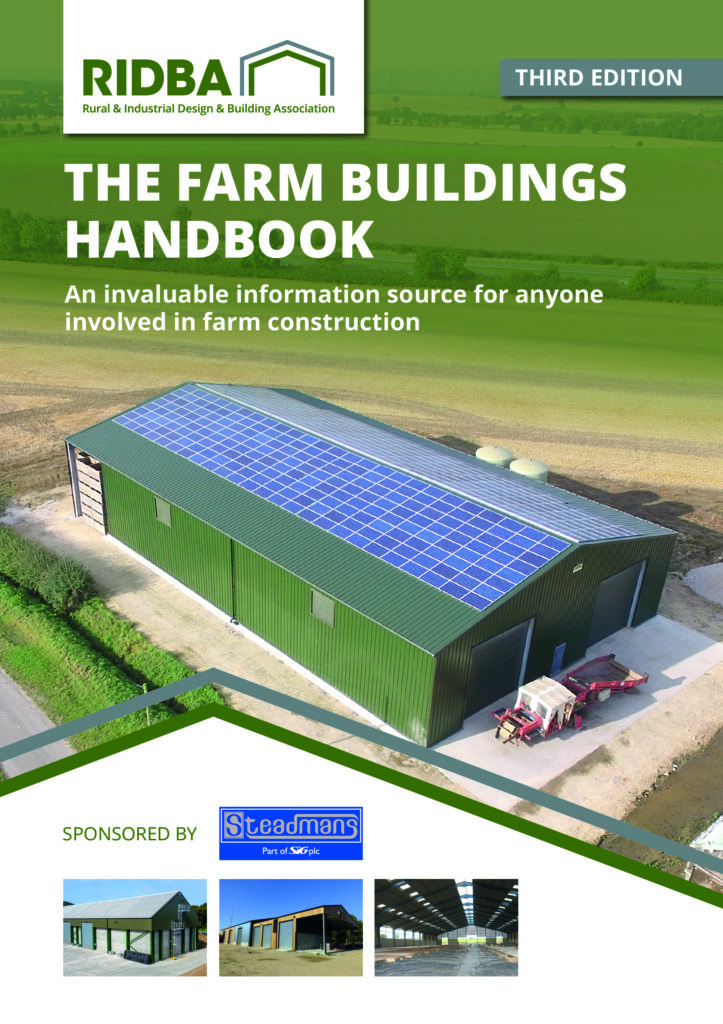
The Farm Buildings Handbook – An Invaluable Source of Information for Anyone Involved in Farm Construction
If there was a shortlist of books that contain enough hard data and guidance to save the UK agricultural industry millions of pounds per annum, this 192-page volume would be on it. The Farm Buildings Handbook, in its third edition edited by Jim Loynes BSc, CEng, MIAgrE, is a reference volume that guides us through the preparations of a build project, the law and regulations, and into construction technology. Thereafter, the book tackles specific building design details for livestock and crop storage and finishes with a comprehensive list of sources of useful information.
Whilst the introduction states that the information in the handbook does not seek to replace the advice from specialist advisers, the current situation in UK agriculture is that independent advice on buildings is very hard to find. The attraction of this guide is that all the information contained is provided by individuals who have contributed to British Standards over the years and /or have years of experience from the now-defunct R&D sector that supported the evolution of design for farm buildings.
The Farm Buildings Handbook is sufficiently clipped in its language to be suitable for producers who require to know what questions to ask the planners and builders before they start a project. There is also a myriad of design details, including 78 tables, that are useful to the generalist at all levels from adviser, builder, planner, architect, QA assessor and finance manager. The handbook should be on the shelf of every large animal veterinary practice in the country, so that they can compare the built environment on clients’ farms with how the target building “should” be if constructed and maintained according to good practice.
The impact of poor building design, construction and maintenance on the efficiency of crop storage and livestock production is massive. Engineering technology has advanced so that, for example, remote sensors in buildings can pass live information on the CO2 content of a store, ambient temperature alarms, individual data on feed intakes from individual animals, and hormone concentrations of milk from individual cows. On the other hand, a ballpark of 50% of all new livestock buildings do not have competent ventilation capacity due to ignorance of design guidance published over 30 years and accepted around the world. Respiratory disease in UK livestock inflicts millions of pounds of losses per annum. Similar associations can be made between the contribution of poor flooring and the cost of foot problems.
An agricultural building is an investment for a generation of use. It will often be the single largest investment a producer has to decide upon. But, unlike the purchase of a piece of field machinery where all the technology is put together by experts before purchase, the producer is often left to choose elements of building design with minimal or conflicting guidance. The Farm Buildings Handbook is a sub-£20 investment that is good for the next decade.
Last month, RIDBA attended and presented at an All-Party Parliamentary Group (APPG) on Working at Height meeting with a focus on working at height in rural environments.
All expressed their desire for change in the industry with regards to training and ensuring only skilled contractors, like RIDBA members, carry out specialist works. The overall consensus was that attitudes to health and safety in the sector are likely to change with a new generation of workers coming through, who will be trained and educated to higher health and safety standards. Minutes from the meeting can be found here.
Steel is a remarkably versatile construction material and has so many uses within modern agricultural and industrial buildings. In addition to the structural frames, which are usually made from hot-rolled carbon steel, galvanized cold-formed steel is often used for the purlins, cladding rails and the roof and wall cladding, while steel bolts hold the structural elements together and reinforcing mesh prevents the concrete slab from cracking. This versatility is due to the unique combination of properties that enable steel to be formed into useful shapes, while possessing sufficient strength to withstand the heaviest snow or strongest winds. Despite this, steel is usually regarded as a commodity to be bought at the lowest price possible from wherever it is available, often with little thought to the precise specification required for a particular job or the potential consequences of getting it wrong.
The aim of this article is to shine a light on the hidden metallurgy within the humble steel beam or column and explain the how its properties determine its suitability for certain applications. Most engineers recognise the importance of specifying the correct steel strength, although “washing machine” grade (commonly known as DX51) still finds itself used in structural applications, but how many engineers think about fracture toughness or specify the correct steel sub-grade? What about weldability or the impact of heat treatment or other fabrication processes on the steel’s properties? All of these issues should be considered routinely, but this is seldom the case in practice.
Steel composition
At its most basic, steel is an alloy of iron and a small amount of carbon (up to 1.67% by mass) plus small quantities of other elements. As the carbon content is increased, so the strength increases but the ductility reduces, and it becomes more difficult to weld. By keeping the carbon content low and adding other elements, steel manufacturers are able to maintain the desired strength without losing ductility, but with other potential disadvantages. The steel composition is, therefore, a critical factor to consider when selecting the appropriate steel grade for a particular application. In practice, this is dealt with by a complex classification process resulting is a range of steel “grades”. BS EN 1993-1-1 contains a list of suitable steel grades for structural applications, such as beams and columns, along with the corresponding product standard for the steel, e.g. BS EN 10025 for structural steel. Provided that the engineer specifies the steel to the appropriate grade and the steel manufacturer makes it to the corresponding product standard, there should be no need to consider the composition any further. If, however, there is any doubt regarding the grade, for example if it is not clearly stated on the documentation or there is no mention of the product standard to which it was manufactured, the engineer should check the stated composition on the mill certificate against the composition prescribed in the standard, e.g. does it conform to BS EN 10025 S355? It is worth noting at this point that hot rolled steel sections should be supplied with a CE mark, which should include the necessary information.
Steel properties
Specifying the steel to BS EN 10025 will ensure that it is suitable for structural applications, while specifying the correct grade, e.g. S355, will ensure that it has the correct strength. However, there are three other properties that need to be considered:
Ductility
Fracture toughness
Weldability
When steel is loaded in tension it follows the stress-strain relationship shown in Figure 1. Initially, the steel stretches in a reversible elastic fashion and carries the load without permanent deformation or damage. This is the state that all structural steelwork should remain in throughout its working life. If, however, the stress reaches the yield strength of the steel (fy in Figure 1), plastic deformation will begin to occur as the steel stretches with no corresponding increase in load (the horizontal portion of Figure 1). Importantly, the load is maintained in this condition. If steel in a structural frame started to yield, the rafters would sag, but would not collapse at this point. The extent to which a material can plastically deform without failing is known as its ductility, and it is this property that ensures what when steel structures become overloaded, they give plenty of warning before collapsing. Beyond the plateau, the steel actually becomes stronger through a process known as work hardening before reaching its maximum tensile strength (fu) and ultimately failing. The difference between the load at which the material begins to yield and the failure load provides a very useful safety margin in the case of an engineer’s miscalculations or the overloading of the frame by exceptional storms or snow drifts.
Figure 1 Stress-strain curve for carbon steel
Although steel can generally be regarded as a ductile material, its ductility is dependent on a number of factors including temperature and rate of loading. For example, a standard sample of S275 JR structural steel loaded slowly at 20°C will be ductile in nature, but the same piece of steel at -40°C loaded suddenly is likely to suffer a brittle failure. Such steel would therefore be unsuitable for use as a crane stop or crash barrier in cold climates. The difference between the brittle and ductile failures is related to the amount of energy that the steel can absorb during the fracture process and this property is referred to as the material’s fracture toughness. It was a lack of understanding of this basic principle that led to the tragic loss of the Liberty ships and numerous failures of bridges, marine and offshore structures.
The standard way of measuring the steel’s fracture toughness is with a test known as the Charpy V-notch test. In this test, a small sample of steel with a 10 mm square cross section is given a 2 mm deep V shaped notch on one side. The sample is then placed in a test machine in which a pendulum is swung at the sample to break it. Having passed through the sample, the pendulum rises to a level corresponding to its resultant energy after the impact. Subtracting this value from the initial energy of the pendulum gives the amount of energy absorbed by the fracture process. By repeating the test for a range of sample temperatures, a picture can be built of the suitability of the steel for various applications. As a general rule, any sample absorbing 27 Joules of energy or more at a given temperature, may be regarded as being ductile at that temperature, while samples that absorb less than 27 Joules are brittle.
The third property, weldability, is related to the composition of the steel and is measured by the steel’s Carbon Equivalent Value (CEV). This is a measure of the combined content of carbon, manganese, nickel, chromium, molybdenum, vanadium and copper. The CEV determines the welding procedures that need to be followed in order to obtain a reliable weld. All weld procedures must, therefore, be qualified by a maximum CEV and should not be used beyond this limit.
Engineering practice
In practice, engineers have too little time to become amateur metallurgists every time they wish to specify a piece of steel. Fortunately, the Eurocode design standards and the material product standards have dealt with the metallurgy and present the engineer with a relatively simple specification procedure. At the heart of the method is a list of suitable steel grades and their product standards, e.g. BS EN 10025 for hot-rolled open sections. All of the structural steel grades begin with the letter ‘S’, e.g. S355. By selecting one of these grades, the engineer can be sure that the steel is suitable for fabrication (i.e. weldable) and suitably ductile for structural use. The number following the S is the nominal steel strength, e.g. 355 N/mm2. Note that this is not the necessarily the design strength of the steel fy, since this also depends on the thickness of the steel. The issue of brittle fracture is dealt with by the use of sub-grades, e.g. S355 J0, which refers to a steel type that absorbs at least 27 Joules of energy in the Charpy V-notch test at 0°C. The selection of the appropriate sub-grade takes into account a number of factors including the proposed service temperature.
Steel grades and sub-grades
Structural steels are manufactured to tightly controlled processes according to a product standard and should be CE marked. When buying steel, it is important to specify the product standard, e.g. BS EN 10025, and to avoid any steel products that do not have the appropriate certification or where there is no mention of the product standard. BS EN 1993-1-1 contains a list of suitable steel grades for structural applications, such as beams and columns, along with the corresponding product standard for the steel. While other steel grades may, in theory, “do the job”, only steel grades listed in BS EN 1993-1-1 should be used for structural applications.
The name of the steel grade follows a simple classification system comprising the product standard, the application type and nominal yield strength. For example, BS EN 10025 S355 means that the steel has been manufactured to BS EN 10025, it is a structural grade (the S means structural), and it has a nominal yield strength of 355 N/mm2. Specifying BS EN 10025 S355 when ordering steel is a good start, but is not sufficient, as it says nothing about the steel’s fracture toughness. To this end, the designer must also specify the steel sub-grade as explained below.
The sub-grade, e.g. S355 J0, relates to the fracture toughness of the steel and, in particular its performance in the Charpy V-notch test under standard test conditions. For those who have never had the pleasure (or pain depending on personal preference) of metallurgy lab sessions at university, the Charpy apparatus comprises a pendulum that is swung at the metal test sample causing it to break at a carefully machined v-notch. Having broken the sample, the pendulum rises to a level corresponding to its remaining energy, thereby giving a measure of the energy absorbed by the sample. The greater the energy, the higher the fracture toughness, with 27 joules generally taken as the cut-off between ductile and brittle behaviour at a given temperature. In the example of S355 J0 the “zero” simple means that at least 27 Joules is required to break the sample at 0°C in the standard Charpy test. By comparison, a JR steel achieves 27 Joules at “room temperature” (20°C) while a J2 absorbs 27 Joules at -20°C.
Brittle fracture
In practice, the susceptibility of a steel member or connection to brittle fracture depends on a number of factors including:
The service temperature of the steel
The thickness of the steel
Any holes or changes in section
Whether the steel is in tension or compression
Whether the stress is uniform or not
The rate of loading
Service temperature
Steel can become brittle at low temperatures, as evidenced by the failure of some steel structures in very cold weather, so the minimum service temperature of the steel needs to be considered when selecting the steel sub-grade. For buildings, two basic conditions are considered: ‘internal’ and ‘external’. In the UK, and for the purpose of sub-grade selection only, the minimum internal temperature is specified as -5°C, while the external temperature is specified as -15°C, so no further analysis is required to determine the temperature. Care must be taken, however, when designing for cold climates or cold stores, where temperatures are likely to be lower than the standard values noted above. For agricultural buildings, especially those partially open to the external atmosphere, the structural engineer must decide whether to class the steelwork as internal or external, depending on the building’s use and likely exposure to cold temperatures.
Thickness
As a general rule, the thicker a steel element, the more susceptible it is likely to be to brittle fracture. For this reason, the old British Standard BS 5950-1 and, more recently, the Eurocodes specify the maximum allowable thickness for a given service temperature, sub-grade and detail. For hot-finished beam and column sections, this sets the limiting thickness of the flange.
Holes and detailing
Any sudden changes in geometry (e.g. width or thickness) will result in a local stress concentration, which could act as the start point for a fracture. This includes cut edges and holes, so connections between members are a particular concern in this respect. Uneven stress distribution is also an issue, so welded connections to unstiffened flanges, for example, need extra care as the stress is not uniform across the width of the flange.
Tension and compression
Brittle fracture only occurs in elements subject to tensile stress, so the state of stress in all parts of the structure needs to be understood. Columns, for example are almost always in compression (unless they are holding the building down in very strong winds) so brittle fracture is less of an issue than in bracing members and their connections. Beams subjected to bending action have one flange in tension while the other is in compression, so theoretically at least the tension flange should be checked. A more severe case would be the tension zone of a moment connection, e.g. the top portion of a rafter to column connection.
Rate of loading
Normally ductile materials can fail in a brittle manner if subjected to sudden loading, such as an impact. Special care needs to be taken when designing structures such as barriers or crane stops, which can receive very high levels of dynamic loading in service.
Engineering codes and guidance
The Eurocode that covers brittle fracture and sub-grade selection is BS EN 1993-1-10. At the heart of the design approach is a check that the maximum element thickness (e.g. flange thickness) does not exceed the limit specified in the Eurocode for a given sub-grade, reference temperature and design stress level. Other factors such as detailing and rate of loading are accounted for by adjusting the reference temperature. Unfortunately, this adjustment is rather complicated and unnecessarily onerous for simple building structures, so to assist engineers in the UK, a “Published Document” PD 6695-1-10 is available as an alternative to the Eurocode method. The PD uses the Eurocode and UK National Annex as its starting point but presents an alternative method for engineers in which the limiting thickness may simply be looked up in a table. Tables are presented for internal steelwork in buildings, external steelwork in buildings and also bridges.
The tables are generally easy to use and this method is certainly recommended over the Eurocode method. However, care is needed to ensure that the correct detailing conditions are selected. The following “detail types” are included:
Plain material
Bolted
Welded – moderate
Welded – severe
Welded – very severe
The difference between the welded categories depends on the stress distribution across the element, so an end plate in a pinned connection will generally be “moderate”, while an extended end plate in a moment resisting connection is “very severe”. Further guidance on the use of PD 6695-1-10, including examples of detail types, is given in SCI publication ED007.
Due to COVID-19, this year’s RIDBA Industry Day was postponed. However, we are delighted to announce that the Industry Day has been rescheduled!
RIDBA Industry Day 2021 will be held on Thursday 22 April in Abbey Hotel, Malvern, which is an ideal venue to adhere to social distancing requirements. We have a great day lined up, with key industry speakers and topics that matter to your business. Plus, for those that were looking forward to a visit to the fantastic Morgan Motors factory, we are excited to still be able to offer this tour as part of the event. To book, please complete our booking form and return to [email protected]. Find out more here.
There has recently been some updated guidance published on gov.uk regarding CE marking. As members will be aware, changes will include the introduction of the UK Conformity Assessed (UKCA) marking and a system of third-party conformity assessment by UK-recognised approved bodies, in place of current EU system of notified bodies.
To allow businesses time to adjust, CE marked goods in scope of this guidance that meet EU requirements (where these match UK requirements) can continue to be placed on the GB market until 1 January 2022 where EU and UK requirements remain the same. This includes goods which have been assessed by an EU recognised notified body.
These transitional measures will only apply until the 1 January 2022. From this point, the UKCA mark will be required to be displayed on products, where the CE mark is currently used, to show compliance to the UK domestic regime. To ease the burden on businesses, until the 1 January 2023, for most UKCA marked goods, you have the option to affix the UKCA marking on a label affixed to the product or on an accompanying document. The economic operators (whether manufacturer, importer, or distributor) should take reasonable steps to ensure the UKCA marking remains in place. From 1 January 2023, the UKCA marking must, in most cases, be affixed directly to the product. You should start building this into your design process ready for this date.
Businesses are being encouraged now to prepare for the changes to the Construction Products Regulation, and the Government has published detailed guidance, although this does not cover Northern Ireland and further information will be provided for products to be placed on the market there.
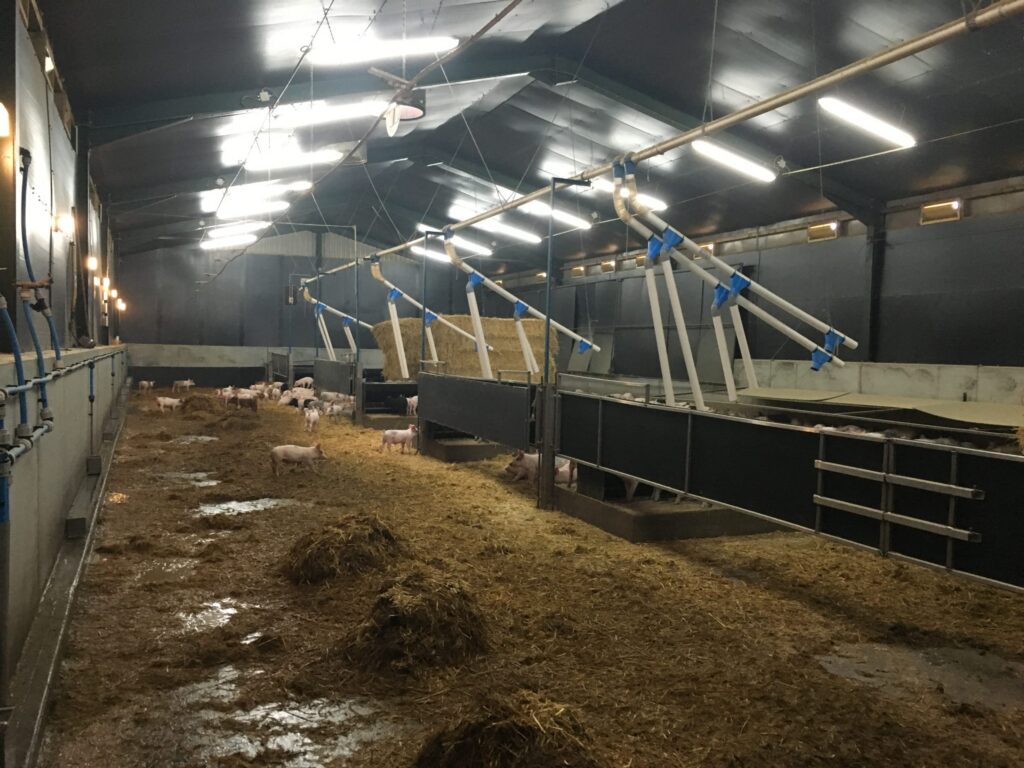
Efficiently run livestock housing is key to productivity, health, welfare and, ultimately, the success of the industry. Proficiently balancing inputs and outputs places some businesses ahead of others and creates more resilience in navigating through the uncertainty of the future while we live through these unprecedented times.
In 2019, English pig producers were asked about their predicted investment into new buildings and technologies. Half of producers surveyed said they are likely to be capping investment into buildings at £50,000, mostly because of the known return in investment and the previously mentioned uncertainty of the industry. Producers do want to invest long term, with more than half keen to build a healthy and sustainable farm business to pass on to the next generation. For producers to have the confidence to invest and drive business improvement, they need reassurance that their investments will increase production efficiency, while also providing welfare and environmental improvements.
Making savings in running costs and inputs is not a new theory in business management plans, but is increasingly at the forefront of investment considerations, not only to streamline production and reduce running costs, but also to support the UK Government’s requirement to reduce all greenhouse gas emissions to net zero by 2050. GrowSave, a collaboration between AHDB and NFU Energy, is a knowledge exchange programme helping both farmers and growers save energy. Until recently, the programme has been focused solely on horticulture, but as energy saving and management is clearly critical across wider AHDB sectors, the programme has now been expanded into the cereals, dairy, pork and potato sectors. To date, the programme has helped horticultural businesses save energy and reduce their environmental impact, which, due to the volatility of energy prices over the last five years, coupled with the increased demand for year-round produce, have been significant drivers for businesses to carefully manage their energy consumption. Pig producers have similar pressures to meet consumer needs, with running costs, in particular electricity, driving the need for overall efficiency improvements.
GrowSave has already helped businesses recognise areas in which energy savings can be made. A market review and gap analysis have identified current practices and highlighted where changes could be implemented, either now, or in the future, to improve business performance and energy efficiencies, while reducing carbon emissions.
Discussions with pig producers and industry representatives dominated by the themes of slurry treatment, including cooling, LED lighting, automation, and data acquisition. Other themes that people are thinking about include the use and improvement of heating systems or climate control techniques, and the application of renewable energy, such as heat pumps, solar photovoltaics, or anaerobic digestion.
The technique of cooling slurry before it leaves the pig shed brings two principal benefits: ammonia suppression (most producers achieve reductions of 30-50%), and heat recovery. Which of these has the upper hand depends on the individual system. Installation of this technology is most efficient in new buildings but can be retrofitted.
Other slurry treatments, such as plasma reactors producing ammonium nitrate liquid fertiliser, are under development.
Now that energy-efficient LED lighting is widespread, specialist products with tailored spectral output are emerging. One supplier of such lighting, Unilight UK, claims that Danish studies on pigs recorded growth increase of 3-5%, or about a week, under LED lighting. In addition, sow lactation improves, piglets grow quicker, and weaning weight increases.
Data is commonly used to benchmark farm operations and often energy consumption as well. When looking to improve energy efficiency, this data should not be limited to the obvious areas such as energy consumption, temperature, on/off times, etc. To get the best value from data, it should be gathered and reported against all sensible metrics, such as feed requirements, fertility, weight gains, mortality, etc. By doing so, the full impacts of the changes that are made can be assessed and the right decisions made to gain maximum efficiencies in all aspects of production, together with using predictive analytics.
To find out more about the successes of GrowSave so far, visit the AHDB website: ahdb.org.uk/growsave.
Design guidance on lighting for livestock buildings has remained rudimentary for years. BS5502: part 40, (1990) states that natural lighting should be provided for cattle where possible, with supplementary artificial lighting where appropriate. Target light levels recommend 50 lux as standard service illumination and 300 lux for inspection. Similar guidance is given for sheep and pig buildings but with the comment that reproduction efficiency in sows is particularly sensitive to changes in day length (photoperiod). Knowledge of lighting requirements for poultry is more advanced than for other species, but even so the gap between was is required and what is delivered inside a building can be miles apart.
Lighting is an area where it is possible to add value to building design, but sales will only come if the added cost of added natural or artificial light can be justified by clear welfare/health/production benefits. The potential for getting better lighting control into livestock buildings is good because the baseline of knowledge is low, and the tools to provide on-site awareness are now very low cost.
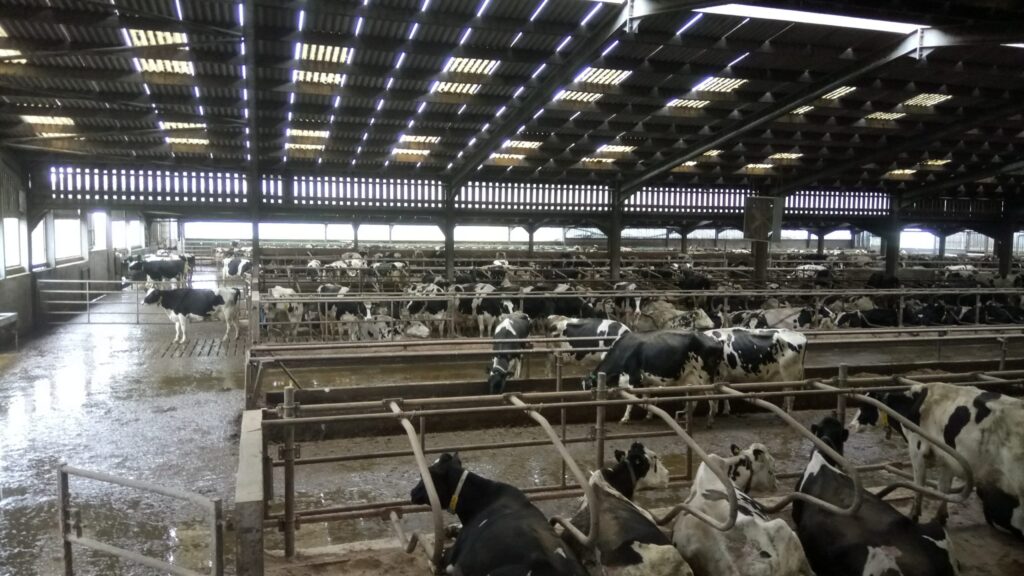
The RIDBA Farm Buildings Handbook suggests 10-15% of the roof area as rooflights and mentions that whilst there are commercial pressures that support more rooflights, attention needs to be paid to solar gain. There was a trend in animal welfare dialogue 20 years ago that suggested that more natural light equalled more welfare benefits, and therefore that more rooflights equates to an improvement, but the facts are different. There are considerable benefits to be gained by “adequate lighting” but the negative impact of >10% rooflights on adult cattle kept inside in the summer months in the UK can have a negative influence on feed intakes and therefore yield, on the prevalence of environmental mastitis, and on financial returns. The design requirements are to take what is known, not opinion, and apply it to new and existing buildings.
The value of a controllable lighting system for cattle is based on clear scientific data that has shown that dairy cow fertility and milk yields are improved by a regime of 16 hours light, minimum 6 hours dark, per day. Furthermore, “light” is >200 lux and “dark” is <20 lux. Light meters cost £20-£30 and are simple to use, but I have never been on a farm where they are used by either the farmer or vets to solve problems. The facts are simple; incident light has biological impacts; light has quality and duration and can be measured; and nowhere in the UK has 16 hours of daylight 365 days a year. We need better lighting systems.
A lighting system that delivers minimum and maximum light levels across all the relevant floor area of a livestock building, automatically (remove human interference), will undoubtably cost more than a typical minimum farm building lighting system. But consider the benefits: if milk yields increase by 3% as a result of a 16 h >200lux: 6 h <20 lux lighting regime, a 300 cow herd producing 10,000 l per year would increase income by £22,500 p.a. The automation of lighting is essential, because dry cows, those resting in the last 60 days of pregnancy, benefit from a reduced photoperiod of 8 h light,16 dark which sees an improvement in immune function, a positive health benefit, and improved milk yield in the following lactation. An efficient livestock unit will have different light regimes according to the physiological needs of the different classes of animals. Natural light might have a good cost benefit ratio, but nowhere in the UK can natural light provide 16 hours at 200 lux inside a building. We need to sell the benefits of control.
Scientific studies looking at light regimes and young cattle are few, but unsurprisingly the results are similar to those seen in adult cattle. One study recorded a significant increase in growth rates from birth to 56 days, associated with increased dry feed intake in calves exposed to 600 lux on an 18 h light, 6 h dark photoperiod per day compared with calves on a 10h light, 14h dark photoperiod. A further study has shown a similar increase in calf feed intakes and a reduction in diarrhoea compared to calves on a shorter light period, with a system of 12 hours natural light supplemented with timed artificial light giving approximately 415 lumens at calf eye level. Calves on the longer lighting regime reached weaning weight quicker than those on the other treatments with no significant difference in total concentrate intakes and gave a 20% reduction in costs to weaning as a result of reduced labour, milk and medication costs. A study of calf facilities on 38 commercial farms reported an average 805 lux at the feeder, with a range of 9 to 20,000, and slightly higher at the calf resting area. There is profit for everyone in improving poor lighting systems.
The poultry industry has led the way on improved lighting systems for health and productivity gains, although application of knowledge on light quality and automated regimes still has market opportunity in the commercial sector. LED lighting systems may cost more to install than conventional fluorescent systems, but the ability to provide good light distribution produces an optimal distribution of birds across the floor, which minimises vice and health issues caused when birds congregate in preferred light areas. Equal light distribution minimises shadow formation which can impact on bird behaviour. LEDs are easy to dim and therefore provide a gradual change from “light” to “dark”, and also provide high-frequency lighting. Poultry perceive light frequency below 160 hertz as a series of flashes; conventional fluorescent lighting may have a frequency of 50 hertz and will not provide a stable light environment.
There is a good future in light for livestock. Recent work has shown significant increases in Vitamin D3 content of milk from cows exposed to 30 min/d of UV for 12 weeks, which suggests that the wavelength of light is an area that should be investigated with regard to animal health. The impact of natural light on hygiene issues is mildly understood, for example with reference to the survival rate of airborne viruses and bacteria, and our ability to artificially provide lighting benefits will continue to increase. We do however need to keep an eye on potential negative issues. Light pollution in rural areas can and should be addressed at the design stage, not at a planning enquiry. Light fittings and maintenance should always acknowledge health and safety issues in an industry that has a poor record and attitude to such areas. And don’t forget solar gain; rooflights are excellent for the winter period but can be destructive in the summer. Hot cows don’t work. Keep cows cool, buy a light meter, and use it to create better buildings.
Written by RIDBA Technical Consultant, Jamie Robertson.
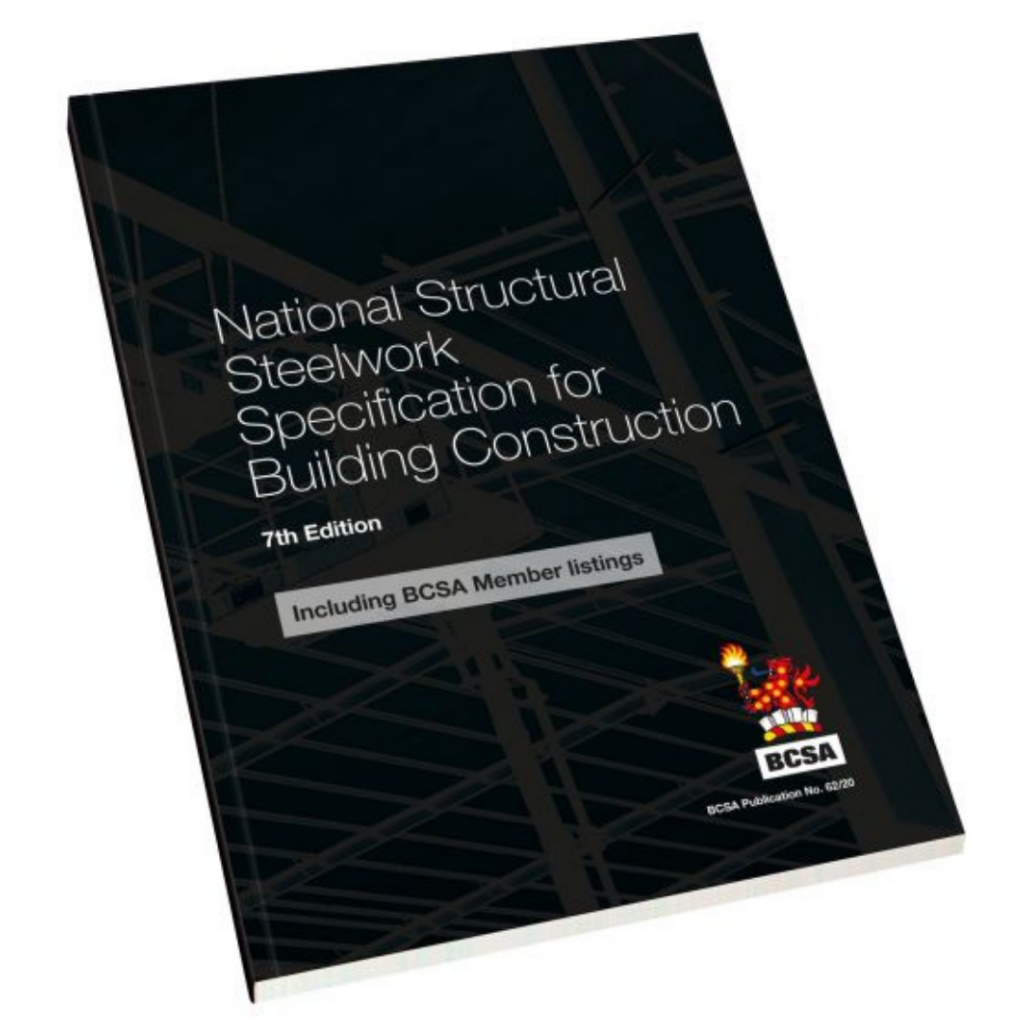
NSSS – National Structural Steelwork Specification
The BSCA has recently published the 7th edition of the NSSS. This latest edition has been extensively updated and represents the biggest change since its introduction in 1989. One of the main changes is the inclusion of a new section on intumescent paint systems.
The National Structural Steelwork Specification for Building Construction (NSSS) is primarily a construction (or execution) specification but also acknowledges the common contractual situations where the steelwork contractor designs the connections (and in some cases the members as well) – it includes checklists of information that the contractor needs to carry out design.
The principal topics covered in the NSSS are as follows:
Information required by the Steelwork Contractor
Materials
Information provided by the Steelwork Contractor
Workmanship
Welding
Bolting
Fabrication accuracy
Erection
Erection accuracy
Protective treatment
Quality management.
Following the tragic Grenfell Tower fire and the call from Dame Judith Hackitt for industry not to wait for legislation, the BCSA said it and the wider constructional steelwork community decided to take ownership of the specification, application and inspection of intumescent paint systems.
Section 10 of the NSSS now includes comprehensive information on intumescent paint systems and to improve quality, it encourages the paint systems to be applied in the workshop rather than on-site. Other significant changes include a mandatory requirement for all steelwork contractors to put in place a third-party certified welding quality management system to BS EN ISO 3834.
The main body of the NSSS is limited to Execution Class 2, but this version also contains an Annex of the requirements for Execution Class 3 for static structures and an Annex giving general guidance on Execution Class 3 for buildings subject to fatigue, such as crane supporting structures.
To allow steelwork contractors time to put in place the necessary third-party systems to comply with the Specification it has been decided that the NSSS will not come in to force until 1st January 2021.
Hard copies of the 7th edition of the NSSS, which now includes BCSA member listings, can be obtained from the BCSA Bookshop from Monday 14th September and are priced at £20 for BCSA members and £25 for non-members.
CE Marking Campaign – RIDBA Strives for the Highest Standards
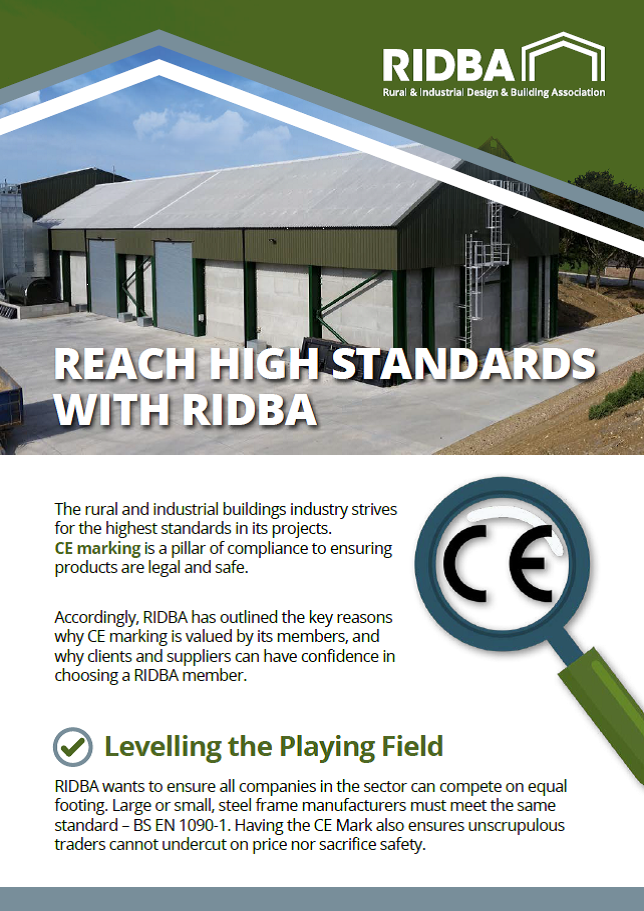
Last year, the Rural and Industrial Design and Building Association launched a campaign to promote the importance of CE Marking, not only as a reminder of the legal obligations but also as a pillar of compliance in the industry. For fabricated structural steelwork, CE Marking became mandatory on 1 July 2014 and even six years on, there is still not always an even playing field.
RIDBA’s campaign outlines four key reasons why CE Marking is valued by RIDBA members, and why clients can have confidence when choosing a RIDBA member:
Levelling the Playing Field
RIDBA wants to ensure all companies in the sector can compete on equal footing. Large or small, steel frame manufacturers must meet the same standard – EN 1090-1. Having the CE Mark also ensures unscrupulous traders cannot undercut on price nor sacrifice safety.
A Fully Compliant Industry
RIDBA is raising the bar across the industry, supporting new members to achieve the CE Mark, as well as supporting members through Brexit and through trade across the EU and the pending introduction of the UKCA mark early next year.
Client Peace of Mind
Clients, customers and specifiers can be confident that RIDBA frame manufacturers have all achieved the CE Mark, meet BS EN 1090 Parts 1 and 2, and design buildings to the latest design standards.
Consistent Enforcement
Trading Standards are now enforcing CE Marking across the UK. RIDBA’s Primary Authority Agreement with Dorset County Council Trading Standards ensures that enforcement of the CE Mark is consistent across the UK and provides a simple way for companies to report. Once a report is made, the agreement ensures that all cases of non-compliance of the Construction Products Regulation are investigated.
A criterion of RIDBA membership is that CE Marking must be achieved, to assure clients that members work to the highest and safest standards. In addition, RIDBA has also recently introduced a Provisional membership category, designed to help start-up companies achieve their CE certification before coming a full member.
“A huge issue that our members face is having to compete with companies who are not complying with the Construction Products Regulation and are cutting costs and safety measures by doing so. With this campaign, we work towards a more equal, safe and compliant industry for all, and will continue to strive for the highest standards by supporting and informing members with the changes to come.”
We use cookies to ensure that we give you the best experience on our website. If you continue to use this site we will assume that you are happy with it.