Designing Steel Framed Buildings for Fire

Page-15-Technical-News

Introduction

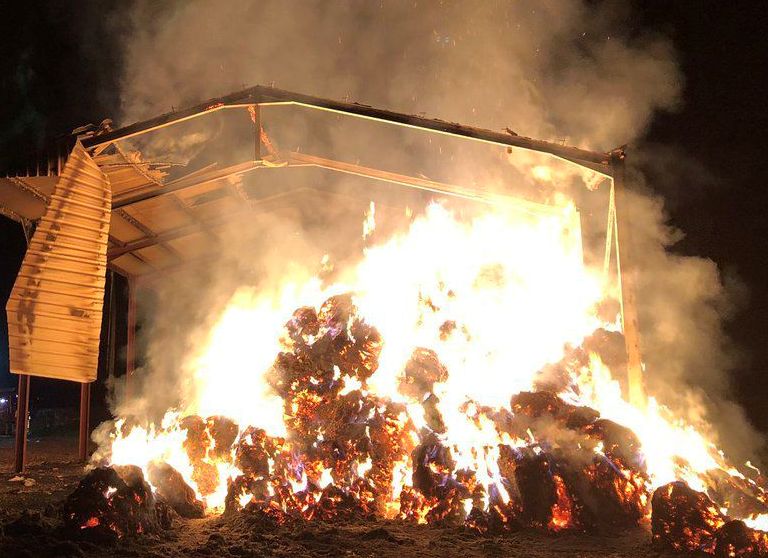
I’m writing this article on the 4th anniversary of the Grenfell Tower tragedy, an event that shocked the entire nation and shone a much-needed spotlight on the issue of fire safety in buildings. Of course, there are several significant differences between a highrise residential block and a single-storey agricultural building and many of the issues identified at Grenfell Tower do not apply to grain stores or animal housing. Nevertheless, fires do break out on farms, sometimes with tragic consequences, so it seemed timely to dedicate this article to the subject.

Regulations and fundamentals

As most readers will be aware, agricultural buildings that are not used as dwellings are exempt from the Building Regulations provided that they meet certain conditions. RIDBA members, however, also supply a wide range of non-agricultural buildings (e.g. buildings for industrial, retail or educational applications), so knowledge of the basic requirements of Approved Document B, the part of the Building Regulations in England and Wales dealing with fire, is important. Furthermore, farm buildings are sometimes built close to dwellings (e.g. a barn next to the farmhouse) or are converted for other uses (e.g. a riding school), so the Building Regulations exemptions don’t always apply. Fortunately, even when a single-storey building falls within the scope of Approved Document B, the rules are far less onerous than they are for multi-storey buildings.

There are two fundamental issues that need to be considered when designing a building against the risk of fire:
– Saving the lives of occupants within the building
– Preventing the spread of fire to neighbouring buildings.

The former is usually critical for multi-storey buildings, where there is an emphasis on preventing the spread of fire within the building (compartmentalisation), providing escape routes, the installation of sprinklers and preventing collapse of the structure by protecting critical structural elements. By contrast for single-storey buildings, the emphasis is very much on preventing the spread of fire to neighbouring buildings, in particular through the collapse of a burning building onto its neighbour.

Saving lives

The overriding priority of Approved Document B is saving the lives of building occupants in the event of a fire. This is achieved by a combination of minimising the time needed to egress from the building and maximising the time taken for the fire to spread. The former is enabled through the provision of escape routes leading to fire exits, while the latter is often achieved by the use of fire doors, fire-proof barriers, compartmentalisation and sprinklers. Since the majority of agricultural buildings are single storey, the simplest way of saving lives is to ensure that everyone within the building has easy access to an exit. For this reason, the exemption of agricultural buildings to the Building Regulations states that nowhere within the building may be further than 30m from an exit.

Preventing the spread of fire

Of greater concern for single storey buildings is the spread of fire to neighbouring buildings, especially where a neighbouring building is a dwelling. Preferably, agricultural buildings (i.e. those that are generally exempt from the Building Regulations) should be at least one and a half times their height from any building with sleeping accommodation. Where this is not possible, or for industrial or commercial buildings where there is no exemption from the regulations, it is necessary to design the building such that in the event of a fire. For braced frames, this could be achieved by protecting the external walls only (i.e. the columns and bracing), but this approach is inadequate for portal frames, because the columns and rafters act together as if they were a single structural element. For standard frames with nominally pinned bases, if the roof structure were to collapse in a fire, the walls would also collapse allowing the fire to spread. Of course, in theory, this problem could be overcome by applying fire protection to the entire portal frame.

However, applying fire protection to rafters is difficult and expensive so an alternative solution is needed. SCI publication Single Storey Steel Framed Buildings in Fire Boundary Conditions (SCI-P-313) presents an alternative method in which engineering principles are applied to the design of the columns and bases to demonstrate that the columns alone could withstand the overturning moment applied to them even if the entire roof structure were to collapse in a fire. In this method, the overturning moment at the point of rafter collapse is calculated for a special fire limit state case, in which the loading is less severe than that normally used to design the structure.

The column base strength and stiffness are estimated based on the actual base dimensions and thickness and the size and strength of the holding down bolts. Sprinklers are recognised to have a considerable beneficial impact on the intensity and spread of fire and a significant relaxation in the rules is permitted when they are used.

Fire protection

Where columns along external walls require fire protection, this should extend up to the underside of the haunch, or to the rafter where there is no haunch. The level of fire resistance of the protected columns should be the same as that of the wall. Values of fire resistance (i.e. duration in minutes) are given in Approved Document B. Building designers and frame manufacturers have several options when it comes to the means of fire protection. The most common are summarised (right).

Boards – This is probably the simplest solution and is especially suitable for commercial and retail premises, where the boards provide the additional benefit of hiding the steelwork within a neat box. The boards are fitted as a dry trade after the completion of the structure, so do not interfere too much with the construction programme.
Sprays – This solution is less common in the UK, but is sometimes used where complex shapes would be difficult to protect using boards. The end result, while effective as fire protection, is not aesthetically pleasing, so sprays are not used where appearance is important. Spays are messy to apply and no other construction work is possible during this operation.
Blankets – This solution combines the advantages of boards and sprays. In common with boards, blankets are applied as a dry trade to the completed structure, but like sprays they are suitable for complex shapes. They are especially useful for protecting truss structures, since the blankets can be wrapped around the individual elements of the truss.
Intumescent coatings – Unlike the first three options, which all offer passive fire protection, intumescent coating react to temperature, foaming up to provide fire protection in the event of a fire, but otherwise resembling a painted finish to the steel.

Intumescent coatings can either be thin or thick film and may be applied in the frame manufacturer’s workshop or on site. Off-site applied thin film intumescent coatings are probably the most appropriate for portal frame structures and have a significant market share in the UK.


 

Stress, Design & Livestock

Page-7-RIDBA-News-scaled

Stress is normal, and animals have evolved coping mechanisms that allow them to mitigate ‘normal’ pressures. The problem with stress is not its presence, but the duration. Our livestock systems have slowly evolved to manage the stress factors, and there is still progress to be made. The article below is a summary of a presentation made at the RIDBA AGM earlier this year.

Space

The understanding of stocking density, whether for eating, drinking or lying down has increased steadily, and there is guidance on space per type and/or weight of animal from AHDB and RIDBA. The restriction of this approach is that it ignores the quality of space, so that for example the feeding or lying space at the ends of cattle buildings can be seen as low quality by livestock in wet and windy conditions, or the best possible locations during summer daytimes.


Temperature

The basic understanding of the impact of air temperature on livestock was established in the 1970s and 1980s, with the idea of the thermal neutral zone (TNZ) of temperatures which did not cause an animal to either change behaviour or burn more/less energy to mitigate the impact of temperature. Animals within their TNZ have zero thermal stress. The pig and poultry sectors created building systems that recognised the cost in terms of inefficiencies and stresses of keeping animals outside their TNZ, and created controlled environment buildings. These changes sometimes and still do create other, new problems, but the thermal aspect was recognised. This has not taken place in the cattle sector, where there are large, significant and global benefits to be had for appreciating the TNZ of very young cattle. A potential role for the UK building sector is to push the status quo on youngstock building design, as discussed in the last RIDBA journal. There is also a need to realise the impact of heat stress (HS) created under typical UK conditions. The list below outlines current scientific understanding of the impact of heat stress on calves and heifers.


– Dry matter intake and growth rate reduced
– Elevated blood insulin and protein catabolism
– Accelerated respiration rate and loss of CO2
– Altered blood-based chemistry and respiratory alkalosis
– Altered rumen activity and microbiota affects feed digestibility and rumen fermentation
– Decreased luteinising hormone, oestradiol and gonadotrophins disturb normal oestrus activity, depress follicular development, hence reduced conception rates
– Prenatal HS suppresses embryonic development via hypoxia and malnutrition
– Pre and peri-natal HS impacts on the growth, immunity and future production of newborn calves.

Wang et al (2020) Journal of Animal Science and Biotechnology. Heat
stress on calves and heifers: a review.

Heat stress may sound unlikely under UK conditions, but will be taking place around 20oC, and lower during weather periods or in buildings with high relative humidity (>80%). There are increasing numbers of dairy cattle being housed all year round, with many benefits, but heat stress is being ignored by the status quo of building. The front cover of a leading building journal recently displayed an aerial view of a newbuild 600 cow plus diary unit, which a cursory examination of the image and reference to the RIDBA Farm Buildings Handbook shows has roof ventilation capacity of <25% of requirement. We need to get better at this type of detail, and explain to the client that in this case an additional £11-15k of capital on ridge vent design is likely to increase yields by 3% a year and reduce mastitis cases by 10%.


Thermal dynamics


Livestock production is an energy based business. Put animals in a
building and we can describe a lot of activity inside that built system
in terms of energy dynamics; thermal dynamics. Thermal dynamics
in a livestock building can be influenced by:
– Stocking density
– Level of nutrition
– Floor design and construction
– Drainage competence
– Bedding materials
– Building cladding U values
– Construction quality
– Ventilation system.

All factors listed above are within the influence of the building sector, albeit that a client may choose to make a different choice from one promoted by best practice and design. During the RIDBA AGM one of the members asked whether the livestock building design process included consideration of building U values, as it is in industrial new builds. This made me smile, and is hopefully part of the future, because although the answer (except for the pig and poultry sector) is “no, it is not”, it should be, and it will be. It is a good example of how the progressive end of the building sector will help UK agriculture.


The one specific example given at the RIDBA AGM on building design factors that can contribute to livestock health and productivity related to Infectious Bovine Rhinotracheitis, (IBR), a lingering chronic respiratory infection that appeared in the 1960s and has crept through UK cattle herds in spite of widespread vaccination. Examination of the critical control points on dairy units which can contribute to thermal stress on cattle and both reduce immune competence and support the transmission of the virus produced a simple building design checklist:


– Roof slope
– U value of roof cladding
– Natural ventilation design
– Solar gain
– Air speed
– Moisture management detail.

Moisture management is not directly quantifiable, but all the others are, or can be directly measured. The pig and poultry sector have evolved building systems that have mostly produced ‘controlled environment’ buildings, and 30 years ago at R&D level buildings were designed including all of the factors in the list above. However, intelligent design does not always create optimum buildings, and animal health and welfare can still be found below target in pig and poultry buildings for predictable reasons. The first reason is the reality of decision-making, whereby material and construction costs drive choice towards short-term gains that are long-term compromises. We need to get better at explaining the long-term compromises. The second is construction quality, particularly around air tightness of panel structures, and the third is the understanding and maintenance requirements of building components by the user. Livestock production can produce a very demanding physical and chemical environment. A study of environmental factors in commercial UK pig facilities in 2020 found that successful management of a chronic respiratory issue included robust maintenance and hygiene practices, and was in no way related to building age.


Moisture

Moisture management is a key aspect of livestock systems. Livestock buildings process tonnes of moisture per day, before we pay attention to rainfall, and loss of control of the ins and outs of water has a direct association with animal health and production efficiency. Access to water, water quality, water flow rates and the other side of the equation, management of urine, faeces and dirty water, all matter and impact on animal health. The targets are unfettered individual animal access to good quality water above a minimum flow rate, and waste disposal that does not significantly increase environmental moisture levels in the building. Animals lie down for 12-17 hours a day, so a dry bed is an absolute target, as is a period of dryness after washing out and cleaning a livestock space. The latter is not easy in the middle of winter in the UK climate, but is made easier by correct design of facilities.

There are many aspects of building design that impact on animal health and productivity, but space, quality of space, an appreciation of temperature, moisture and thermal dynamics are all vital aspects that need consideration from the start. There will be stress on livestock in our systems, so we should design to mitigate duration of stress, and acquire the benefits of doing so.

RIDBA Announces Shortlist for the RIDBA Building Awards 2021

Text-placeholder-3

Last year, the Rural and Industrial Design and Building Association (RIDBA) launched the RIDBA Building Awards 2021, designed to recognise innovation and excellence amongst members in the industrial and agricultural buildings industry. After receiving a record number of award entries, RIDBA is delighted to announce the shortlisted projects.

Now in their fifth year, the Awards demonstrate the diversity of skills of RIDBA members, from schools and offices to cattle buildings and grain stores. There are seven categories on show this year including: Education & Leisure, Industrial & Production, Farm Storage, Public Services, Livestock, Residential & Offices, and Retail & Distribution. There is also an additional category to recognise Training.

The judging panel consisted of industry experts including: Martin Heywood (Head Judge and RIDBA Technical Consultant), Jamie Robertson (RIDBA Livestock Consultant), Joe Black (Chairman of the Advisory Committee for Roofsafety), Andrew Brown (Owner, Visit Our Farm), Niresh Somlie (Principal Technical Officer at BM Trada), Stuart Roberts (Deputy President of the NFU). The judges were very impressed by the high level of technical excellence demonstrated by RIDBA members delivering successful projects to their clients.

Head
Judge, Martin Heywood said:

“I would first like to congratulate everyone who entered the RIDBA Building Awards this year. We received some excellent entries, demonstrating that members continue to exceed high standards of work in the industrial and agricultural buildings industry. Although a challenge, we are delighted with results of this year’s Awards and look forward to sharing them with you at the flagship event in September.”

The winners will be announced at the Awards ceremony on Thursday 30 September 2021 at the Macdonald Hotel in Manchester. Bookings for the event are now open, and guests can secure their places by completing the booking form.

RIDBA
would like to take this opportunity to thanks its sponsors for supporting this
event:

Headline
sponsor:

AJN Steelstock

Premium
sponsors:

Joseph Ash Galvanizing, Hadley Group, Kingspan, and Steadmans.
Event sponsor: STRUMIS

Media
Partner:

Farming Monthly

RIDBA would also like to thank Joseph Ash Galvanizing as the Evening Drinks Reception sponsor.

The shortlisted projects can be viewed here.

RIDBA Statement on Cold-Rolled Steel

EA-M-Tasker-image-4

Cold-rolled Steel — What is Going On?

RIDBA has spoken to a number of cold rolled steel suppliers with a view to gaining further insight into the situation of material shortages and price increases.

As you will be aware, the supply of these materials is currently a massive issue for the whole supply chain and primarily due to the ongoing effects of COVID-19. Global output dropped significantly last year and the knock-on effects of that continue to be felt throughout the supply chain. Off the back of that, steel prices are still increasing, on an almost daily basis. Last month saw another £30/ tonne rise meaning that steel prices have risen by £260 a tonne since last July.

The mills that closed down in the UK last March during the first lockdown are where the problems first started, as re-opening them is no easy feat, and can take anywhere between 3-6 months, with several only restarting in September. So, when demand picked up again from May, supply issues were already starting to occur and this gap in supply has grown exponentially as lead times remain extended. Remember, the construction industry has continued working throughout the pandemic. Outside of the UK, capacity in Europe was also greatly reduced due to COVID-19 and is still getting back up to speed.

Shipping costs and delays are now adding to this already volatile situation with boats arriving late with reduced tonnages making the certainty of supply impossible to predict.

There are also reduced exports from China and the Far East into global markets as they seek to boost their own economies — a reduction of some 70 million tonnes of steel exported from the regions in 2021 is predicted compared to previous years.

It is understood that when steel is becoming available, priority is going to the automotive industry after unexpected demand that mills have struggled to accommodate. Sources said steel producers would continue to limit output until at least the second quarter as they assess the demand progression from the automotive sector.

Whether you are a fabricator or a supplier, everyone is feeling the effects of these issues and doing what they can in these difficult, unprecedented circumstances, and it is predicted that we will continue to see supply remain very tight and costs continue to rise for the remainder of 2021.

Suppliers are recommending allowing a further 12-16% increase of already notified increases, many of which have come in from this month, to help prepare for estimation and tenders. Lead times are currently being quoted as anything from 8 weeks to 6 months and priority is being given to existing customers.

RIDBA is keen to hear from members that are being affected by these issues and we are keen to lead a discussion on this topic at the upcoming AGM on 22 April, which we would encourage all members to attend.

Enter the RIDBA Building Awards!

Text-placeholder-1

RIDBA is delighted to be holding is biennial Building Awards on Thursday 9 September 2021 at the Macdonald Manchester Hotel. After a year of event cancellations and postponements, this much anticipated event will be a great opportunity for the rural and industrial industry to come together!

The RIDBA Building Awards are the only awards that recognise the very best in rural and industrial buildings, and are the perfect opportunity for members to showcase their best projects. The deadline for entering the Awards is Wednesday 31 March, so please enter before the closing date.

Entering the awards is simple, and you can do so either by entering online or downloading our entry form. There are four different categories to enter:

  • Rural – Cattle, Equestrian, Captive (zoo) and Domestic
  • Industrial – Light, Medium or Large
  • Other – Retail, Manufacturing, Leisure, Education and MOD
  • Training Award – Schemes, Projects or Managers and Apprentices

Make sure to read the rules and criteria before entering, which can be found on our dedicated Awards web page. Enter now before its too late!

Reverse VAT introduced on 1 March

Treasury-Entrance

Despite efforts from across the industry over the last month, the Reverse Charge VAT has now been introduced, effective 1 March 2021. This is a new way of collecting VAT from businesses that provide construction services within the scope of the CIS (Construction Industry Scheme), in an attempt to ensure the Government is recovering the correct amount of VAT from the construction sector. This means that VAT will no longer be paid to businesses in the supply chain for providing construction services unless they are providing those services directly to an End User.

We would like to thank members who supported the #StopReverseVAT campaign, which reached over 2 million social media users during February and stands as a great example of the industry coming together.

Now that the legislation has been introduced, RIDBA recommends looking at the Practical Guide from Build UK to ensure you understand how Reverse VAT will affect your business. Members can also refer to this checklist to ensure you have taken the necessary actions, including updating your invoices with the required information.

HMRC has confirmed it will “apply a light touch” in dealing with any errors over the next six months, provided that companies can demonstrate they have tried to comply and acted in good faith. 

Important Changes to CE Marking in Great Britain

Untitled-design-17

At 11 p.m. on New Year’s Eve 2020, the UK left its transition period with the European Union (EU) and ended its membership of the EU’s Single Market. With the completion of this Brexit milestone, the UK no longer has to comply with EU regulations, including the Construction Products Regulation (CPR), although for now at least it seems that the intention is to mirror the EU’s rules with the UK’s own domestic legislation. This change also means an end to CE marking in Great Britain and the introduction of a new UKCA (UK Conformity Assessed) mark. Note: This change does not apply to Northern Ireland, which remains inside the Single Market and so retains CE marking.

Under the new rules, the UKCA mark will need to be applied to most goods placed on the market in Great Britain (England, Wales and Scotland) that previously required CE marking. This includes most construction products. The UKCA mark alone cannot be used for goods placed on the Northern Ireland market, which require a CE mark or the new UKNI mark. The technical requirements and conformity assessment processes (e.g. audits) are largely the same as they were for CE marking, so manufacturers should not need to amend their manufacturing or testing procedures if their products are currently CE marked. Whereas manufacturers would previously have dealt with “Notified Bodies”, they must now deal with “Approved Bodies”, but all Notified Bodies automatically became Approved Bodies at the end of the Brexit transition period, so there should be no change from a manufacturer’s point of view. Similarly, the “Harmonised Standards” (hEN) that products were manufactured to and certified against have been replaced by UK “Designated Standards”, but for the time being at least these will be identical documents. The government has published, and will maintain, a list of these designated standards on GOV.UK.

For the specific case of construction products, including steel frames and many cladding systems, the CPR has been replaced in the UK by two new pieces of legislation:

– Construction Products (Amendment etc.) (EU Exit) Regulations 2019
– Construction Products (Amendment etc.) (EU Exit) Regulations 2020

The new regulations essentially translate the CPR into UK law, but with changes to reflect Great Britain’s new status outside the EU’s single market (as noted above). From 1 January 2021, all UK-notified bodies operating under the ‘EU Construction Products Regulation 2011 (EU Regulation No. 305/2011)’ and based in the UK were granted new UK “approved body” status and are listed in a new UK database. The designated standard for structural steelwork is EN 1090-1 and there are no changes to any of the other EN standards that frame manufacturers and designers are familiar with.

The UKCA marking came into effect on 1 January 2021, but to allow businesses time to adjust to the new system, manufacturers will still be able to use CE marking until 1 January 2022 in most cases. From 1 January 2022, however, CE marking will not be recognised in Great Britain, and all products placed on the GB market will need to possess the new UKCA mark. If the EU changes its rules for a particular product, manufacturers who CE mark their products on the basis of these new rules will not Important Changes to CE Marking in Great Britain be able to use CE marking to sell in Great Britain, even before 31 December 2021. The UKCA mark is not recognised on the EU market, so products will need a valid CE mark to be sold to the EU. It is important to note that these changes do not apply retrospectively, so CE marks on existing products manufactured before 1 January 2021 remain valid. Similarly, goods placed on the EU market before 1 January 2021 can continue to circulate until they reach their end user provided that they have a valid CE mark.

Further information may be found at: https://www.gov.uk/guidance/construction-products-regulation-in-great-britain
and
https://www.gov.uk/guidance/using-the-ukca-marking

Written by RIDBA Technical Consultant, Dr Martin Heywood.

History Lessons

My head hurts and my heart sinks.  Nothing to do with sport or politics, but a bulging email collection of data and images of new buildings where animal health is in trouble.  How do we manage to get it so wrong sometimes, when we have so much information at our fingertips?  Or is that the major problem? That our current situation is exacerbated by the difficulties in filtering the useful information from the useless?  Maybe we should pay more attention to past experience. Today is always a good time to ask the question “what can we learn from the past? “

The layout and construction of farm buildings is a balance of resources and desired function, with elements of form introduced occasionally.  Livestock buildings have a challenging set of requirements because the contents are dynamic and require daily intervention of labour.  They are not storage facilities but living accommodation for animals.  Design of facilities will accommodate the house, the bed, the feeding and watering, the effluents, the sick and when done well, the labour.  My current focus is to ask if we are still doing all those things?

Fig. 1 East Lochside, Farm Steading, Aberdeenshire

Fig 1 shows a typical medium sized farm steading from the late-19th century, from the earlier days of the centralisation of facilities which occur in modern farms.  Storage of feed is above the livestock, with a midden for farmyard manure close by.  All materials were moved between and within buildings by manpower, with good design making the most of the topography, the expected impacts of wind and rain, the need for water in specific locations, and gravity to be useful where it can.  There are separate spaces for separate functions, and whilst considerable human effort was required to put hay and grain in the various lofts at harvest time, the six-month task of feeding livestock through the winter would by helped by gravity, for free.  Labour made a far bigger contribution of resources for food production then than now, and good design acknowledged the value of labour inputs. 

The increase in herd and flock sizes in UK agriculture has been accompanied by a substantial decrease in labour resources.  Daily tasks previously carried out by manual labour have been displaced by one or maybe two people on a farm, plus machinery.  Nobody will miss the physical rigours of manual labour on farms, but in the process of evolving into our current systems we have walked into an un-designed animal health and welfare nightmare.

Fig. 2 Arrangement of buildings for a farm of 250 acres (SCMA, 1912)

Fig.2 shows the layout of accommodation for a mixed farm of about 250 acres, with an array of discrete spaces around two yards, with some storage on an upper floor (TSCMA, 1912).  The separation of animals into smaller groups of similar ages will have had significant positive impacts on biosecurity; the control of spread of infections.  Small group size facilitates the observation of individual intakes of feed and water, and the physical signs of health and symptoms of disease in those individuals.  The field barns of mid-19th century are very positive for isolation, but not so handy for labour (Fig 3.) Repeated close contact with humans would mostly (but not always) create a familiarity that would seldom create even sub-clinical stress levels in livestock.  The daily task of shovelling and barrowing manures from many small rooms and buildings is not something we would repeat, but there were some important advantages of the old ways.  Farmyard manures had a higher ‘value’ in the livestock systems of 19th century agriculture than is sometimes apparent  today, with the result that manure management can be treated as an afterthought in some modern designs.  A lack of design detail in waste management is seen in excessive labour cost moving muck with machines on a daily basis, for ever, compared with using a broader view at the design stage.  Large volumes of wastes in one location can cause higher levels of negative impact, such as sedimentation in large slatted tanks, air quality issues, and localised diffuse pollution.  These are all examples of design failure and they all impact negatively on animal health and welfare. Buildings need to be designed to be cleanable, with available time as a major design factor.

Fig. 3 Field Barn. Edale, Derbyshire. Photo: Andrew Critchlow

The requirement for labour in the form of many persons spending many hours in livestock buildings is no longer a design requirement.  This is progress.  But looking back to 150 year old designs we should not ignore some of the inherent risks to animal health and welfare that will have changed, and not for the better.  A traditional layout may have 36 cattle in one room, the byre, another cart shed for calving cows and maybe a sick pen, and then three or four separate air spaces for various different ages of youngstock.  A basic 2020 knowledge of epidemiology will inform us that this is a dramatically lower risk for spreading disease than the large, multi-spanned, 5m eaves height, concrete and steel edifice that is pictured in my inbox.  The design issue is that when livestock buildings are created with cost and not value as a primary outcome, and the long-term risks are not understood, there will be failures. 

The science is very clear on livestock buildings that are constantly stocked, and/or contain a mix of ages within the same airspace.  The risk of chronic and acute diseases, particularly enteric and respiratory diseases, is significantly higher than buildings or spaces within buildings that can be managed on an all-in all-out basis.  And here comes the design punch: how do we currently design buildings with regard to labour and muck?  Most UK livestock farms use tractors designed for field work to clean out buildings, with machinery that requires high eaves heights, large areas of concrete, simple pen designs and flat floors, for a task that may take 20 minutes per pen and happen 6 times per year.  In Europe the use of small machinery for livestock production is common practice, but UK agriculture considers it ‘expensive’.  Large area pens will require rapid turnaround times between batches, which too often equates to inadequate time for effective hygiene procedures.  If we keep putting large numbers of livestock into unclean facilities, the R number can be expected to rise. A now familiar story.

The design solutions for modern livestock systems should include an appreciation of what is needed for sustainable production and to allow labour to practice good stockmanship, including  the provision of good hygiene.  Providing six smaller pens compared with four bigger ones of the same total area may cost more to build, but pens that can be cleaned properly will always make more money than those that cannot. 

The Standard Cyclopedia of Modern Agriculture (1912) Vol. 3. p21 Edited by Professor Sir P Wright.

Written by Jamie F. Robertson BSc., MSc., MIAgrE.

You can download the PDF version here.

Post-Brexit Trade Agreement

The UK has now left the EU and a post-Brexit Trade Agreement was finally reached in late December.

The European Commission has published a summary of the agreement, which can be accessed here.

The Trade and Cooperation Agreement between the EU and the UK includes zero tariff and zero quota trades on goods of UK and EU origin as follows:

  • The UK Border Operating Model sets out a phased approach to the additional checks and paperwork needed to trade goods with the EU.
  • Importers and exporters will need to demonstrate where their goods originated and should read the detailed guidance on Rules of Origin.
  • With a few exceptions, products will have to undergo two sets of conformity assessments if placed on both the UK and EU markets; however, CE marking will continue to be accepted in the UK until the end of 2021.

The Government has provided step by step information for those who import goods within the EU, those who import goods from outside the EU, and those who bring goods through Northern Ireland. The new points immigration system came into force on 1 January 2021, meaning that businesses recruiting from outside the UK will need to obtain a sponsor licence, and all workers from overseas require a visa.

NSSS 7th Edition

NSSS 7th Edition

The National Structural Steelwork Specification (NSSS) has been a familiar fixture on the desks of steelwork fabricators’ engineers and workshop supervisors since its introduction in 1989.  The most recent incarnation of this bible of structural steelwork, the 7th edition, has recently been published by the BCSA with important implications for RIDBA members.  The aim of this article is to highlight the most significant changes from the 6th edition and to discuss what these changes mean for frame manufacturers and other suppliers of structural steelwork.        

What is the NSSS?

The NSSS has long been regarded as the ultimate handbook for the fabrication and erection of structural steelwork, including portal frame sheds, multi-storey buildings and bridges.  It is also an important contractual document, since many clients use it as the specification for their projects, i.e. compliance with the NSSS is a contractual requirement.   For the fabrication shop, the document includes fabrication tolerances and other best practice guidance for general workmanship, rules for welding and the testing of welds and also includes sections on protective coatings and quality management.  For the frame erectors working on site, there are rules relating to erection tolerances and guidance on appropriate site conditions and site work generally.  The NSSS is routinely specified by commercial and industrial building clients so is effectively mandatory for these sectors.  It is less common in the agricultural sector, but many frame manufacturers use it as a best practice handbook, even when not specified by the client.

 Major changes in the 7th edition

While the 6th edition of the NSSS, which was published in 2017, contained several important updates compared to its predecessor, including the introduction of Building Information Modelling (BIM) for the first time, it was always viewed by its authors as an interim version, pending a comprehensive review.  This interim status is reflected in the fact that the 6th edition was only available as a PDF document.  David Moore of the BCSA gives the following reasons for the current revision:

  • The need to be in step with the revised EN 1090-2 published in June 2018
  • The new EN 1090-4 for light gauge steel published in December 2018
  • The fact that the chapter on corrosion protection was 20 years old
  • The need for a specification for intumescent coatings (following Grenfell Tower)
  • Requests from specifiers for Execution Class 3 to be included in the NSSS
  • Demands for a hardcopy version of the NSSS by users.

The resulting 7th edition contains several significant changes from the 6th edition, as summarised below:

  • Mandatory ISO 3834 – 3 for EXC2
  • Mandatory ISO 3834 – 2 for EXC3
  • Routine testing of welds
  • Technical knowledge of the RWC
  • Hold times
  • New look up table for fracture toughness
  • New annex on Execution Class 3 – Static
  • New annex on Execution Class 3 – Fatigue
  • New section of intumescent coatings
  • Revised section on corrosion protection.

Mandatory ISO 3834 certification

Of all the changes noted above, by far the most significant for RIDBA frame manufacturers is the introduction of mandatory ISO 3834 certification for EXC 2 and EXC 3 steelwork.  ISO 3834 has been around for a while and its use is common in the world of highway and railway bridges, where welds have to cope with the demands of dynamic loading and the consequences of failure could be fatal.  However, it was not seen as necessary in the more benign environment of a standard steel framed shed where the loads are generally static in nature and the consequences of failure are less severe.  It is worth noting that the change in status only applies to the NSSS; the rules in EN 1090-1 remain unchanged, so there are currently no implications for CE marking.

According to the NSSS 7th Edition, for EXC 2 the Steelwork Contractor’s system for the management of welding shall be certified as complying with the standard quality requirements described in
BS EN ISO 3834-3, while for EXC 3 and EXC 4 the more onerous comprehensive quality requirements described in BS EN ISO 3834-2 must be observed.  There are no requirements for EXC 1 at present.  For EXC 2 and above, the frame manufacturers will need to have a Weld Quality Management System (WQMS) that complies with the requirements of ISO 3834 across a range of areas including welding personnel and their training, equipment, welding procedures, consumables, heat treatment, inspection and testing, corrective actions for non-conformance and identification and traceability.  The level of detail required within the documented WQMS will depend on the Execution Class. 

The ISO 3834 WQMS should be very similar to the existing welding procedures already required for CE marking, so no major changes are anticipated, subject to the comments in the next section.  The main issue for frame manufacturers is the need for additional certification and the availability of this certification service.  Frame manufacturers will need to check whether the Notified Body that they currently use for CE marking is also accredited for ISO 3834 certification.       

Welding and weld testing

In addition to mandatory certification to ISO 3834, other changes have been made to the sections of the NSSS dealing with welding and weld testing.  These include a couple of changes relating to the Responsible Welding Coordinator (RWC) role.  Firstly, in the context of training welding operatives and ensuring that they hold the appropriate qualifications, the RWC may now act as the examiner, avoiding the need to appoint the services of an external examiner.  This is in line with EN 1090-2 and will be welcome news for small fabricators and frame manufacturers.   Secondly, changes have been made to the technical knowledge required by the RWC, but this only affects the welding of S275/S355 for thicknesses of steel greater than 50 mm.  Clause 5.5.1 of the NSSS dealing with the routine testing of welds has been rewritten to improve clarity and to distinguish between “Process Control” and “Fitness for Purpose”.

Other changes

The previous issue of this column looked at the rules for brittle fracture and the selection of the appropriate steel sub-grade.  It was noted that PD 6695-1-10 presents a simple look-up table for limiting thicknesses in place of the complicated method in BS EN 1993-1-10.  A similar table is presented in the NSSS and has been updated to take account of new research undertaken by the Steel Construction Institute (SCI).

Two new annexes are included in the 7th edition, which present specific rules and guidance relating to Execution Class 3.  The first annex sets out the changes to the NSSS where Execution Class 3 for static structures is specified.  These rules would apply to buildings with a high consequence of failure or similar structures not subjected to dynamic loading.  The second annex sets out specific requirements for structures that may be susceptible to fatigue.  This generally means structures subjected to dynamic loading such as bridges. 

A major addition to the NSSS is a section on intumescent coatings for fire protection.  The scope of the guidance ranges from surface preparation through application and inspection to maintenance and, where necessary, repair.  This new section fills an obvious void in the guidance available to steelwork fabricators and has, in part, been motivated by the tragedy at Grenfell Tower and an acknowledgement that further guidance is needed in the subject of fire safety and protection.

Conclusions and implications for RIDBA members 

The 7th edition of the NSSS represents a major upgrade of this most valuable of documents, although many of its provisions are not directly applicable to the fabrication and erection of agricultural buildings.  By far the most significant change is the need for ISO 3834 certification for welding, which will require an external audit by an appropriately accredited body.  RIDBA members are advised to contact their existing notified body to see whether they are able to offer this service.   Other changes such as the new sections on intumescent coatings and Execution Class 3 will probably only be of interest to those members who fabricate steelwork for larger industrial or commercial buildings.  Finally, it is worth remembering that all of the above only applies when a client specifies the NSSS and does not have any bearing on CE marking or compliance with EN 1090.

The 7th edition of the NSSS is available to purchase in hardcopy form from the BCSA bookshop and is priced at £20 for BCSA members and £25 for everyone else.

Written by RIDBA’s Technical Consultant, Dr Martin Heywood.