Industry Day programme announced

The-Abbey-Hotel-2

RIDBA has published its programme of insightful presentations lined up for the Industry Day on April 21, 2022.

This popular event will include talks from expert speakers on subjects such as mental health, keeping your galvanizer safe and recruiting staff. There will also be exclusive updates from RIDBA’s technical and livestock consultants. Please click here to view the programme.

The event is fast approaching and lots of members have already registered to attend. It is the perfect opportunity to learn, network and develop, so don’t miss out. To register, please complete and return the booking form, here.

During networking breaks guests will have the opportunity to catch up with industry colleagues, suppliers and sponsors. RIDBA would like to thank Briarwood (headline), plus Ayrshire Metals, Joseph Ash Galvanizing, Kingspan and STRUMIS for their support in sponsoring this event.

The event will take place at the Abbey Hotel in Malvern, Worcestershire, and will conclude with a tour of the nearby Morgan Motors factory.

The RIDBA Industry Day is scheduled for April 21, 2022. To book your tickets, please complete and return the booking form, here.

Aiming for net zero: A guide to energy efficient buildings

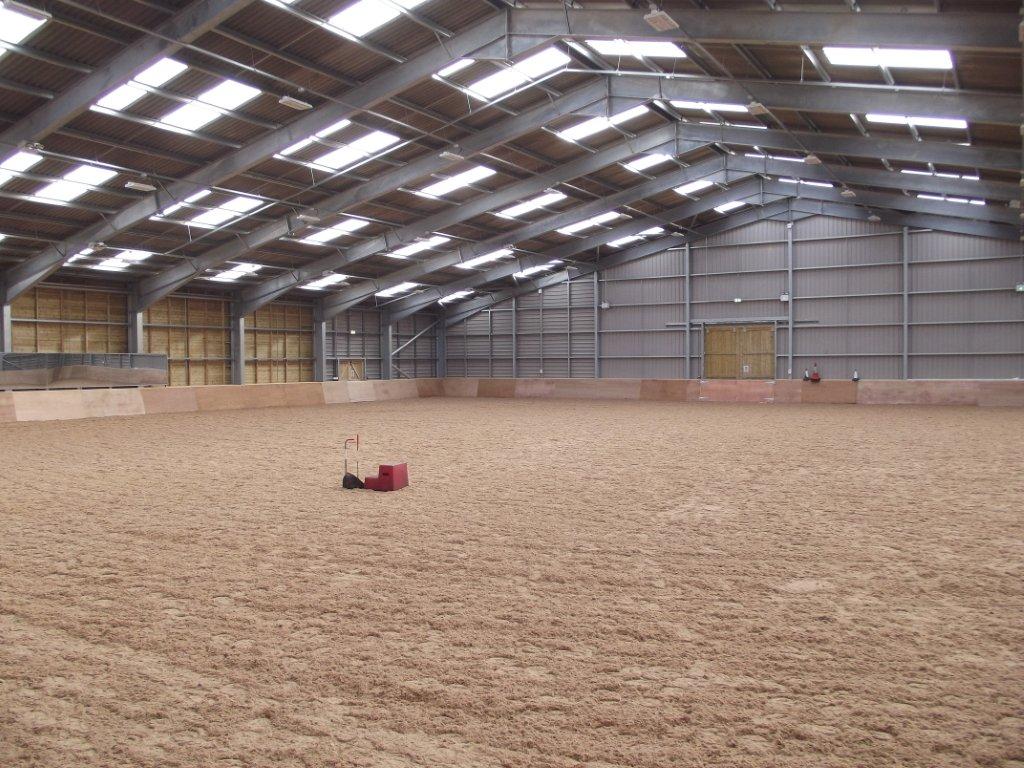
A19-S-and-A-Fabrications-Houghall-College-Equestrain-Centre-06

In the previous issue I wrote about the impact buildings have on greenhouse gas emissions and the potential impact of climate change on the design of buildings. We are all going to be hearing the phrase “net zero” a lot more over the next few years as the UK attempts to balance its environmental books by ensuring the CO2 we release does not exceed the CO2 removed from the atmosphere.

To some, net zero means replacing a petrol or diesel car with an electric model and paying someone else to plant a tree. In reality achieving the government’s goal of going net zero by 2050 is going to require some significant changes to the way we approach many aspects of our lives, including how we construct and operate our buildings.

As noted in the previous issue, buildings contribute to the UK’s greenhouse gas emissions through their embodied carbon (that is the CO2 associated with the building fabric and its construction) and their operational carbon (the CO2 associated with the operation and use of the building). This article looks a little deeper at a few specific issues relating to a building’s operational carbon and considers the ways in which good building design can play a significant role in meeting the nation’s target of net zero by 2050.

Design strategy for net zero buildings

At the highest level, the overall strategy for achieving a net zero building is to minimise the energy required to operate the building and then to generate that energy from renewable sources (i.e., not fossil fuels). In implementing this strategy, there is a clear hierarchy:

  1. Reduce demand for heating, lighting, mechanical ventilation, etc.
  2. Deliver the heating, lighting, etc. as efficiently as possible.
  3. Use the building to generate renewable energy.

While it may be tempting to think covering a roof with photovoltaic (PV) panels is a quick fix that ticks the sustainability boxes, there is little point generating renewable energy and then wasting it. Indeed, as pressure to eliminate fossil fuels increases, the demand on renewable energy sources will also increase and this scarce resource will need to be used wisely. Energy efficiency, therefore, needs to be at the heart of any building design strategy.

Depending on the use of the building, energy demand can be divided into the following categories:

  • Heating
  • Lighting
  • Cooling/ventilation
  • Processes relating to the use of the building (not usually the responsibility of the building designer)

Heating

From a building designer’s perspective, minimising heating demand is a matter of minimising heat loss through the building envelope. Of course, turning the thermostat down by one degree and closing the windows while the heating is on would also help, but that is out of our control. Thermal energy (heat) will always try to move from a relatively hotter location to a colder one and can do so by a combination of conduction, convection and radiation. In a heated building, the particular heat flow paths of concern are conduction through the walls, floor and roof, conduction through cold bridges and convection through gaps in the building envelope. To achieve an energy efficient building, all three of these issues need to be considered by the building designer. Installing 300 mm of insulation but forgetting about the joints around the doors, windows and service penetrations is of little use.

Of the three heat paths, the conduction through the roof, walls and floor is the easiest to tackle and a range of insulation products and insulated panel systems are widely available with plenty of technical literature and support to help building designers specify the product that best meets their needs. The thermal performance of a building element (i.e., an insulated wall or roof) is usually referred to as its “U value” and is quoted in W/m2K, i.e., it is a measure of how much energy escapes per second (in Watts) for every square metre of roof or wall per degree of temperature difference (a temperature difference of 1 Kelvin (K) is the same as a difference of 1°c).

Thermal bridging is a trickier issue to deal with because the strongest materials best suited to load carrying are also the most conductive. Thermal bridging through fasteners is generally considered to be small and is accounted for in the U value for the roof or wall, but larger metal objects, such as steel support beams for balconies or rafters penetrating the building envelope (architects!) can be a major source of heat loss if they are not detailed correctly. Furthermore, the loss of heat will cool the beam or rafter on the inside of the building giving rise to a condensation risk. In some cases, for example balconies, special low conductivity connections have been developed and should be specified where possible. Building designers should seek specialist help if they encounter this situation.

The third source of heat loss, leaky joints, is best dealt with via good detailing, or – more likely – by someone with a tube of sealant. Most building envelope solutions used in industrial and similar commercial buildings are reasonably air-tight by design, especially if the installers follow the manufacturer’s guidance in terms of filler blocks and sealant. The issues tend to be at doors, windows and service penetrations, where gaps are often ignored or left for someone else to fill. This is one case where attention to detail can make a significant impact.

Lighting

The simplest way to limit the demand for artificial lighting is by ensuring there is sufficient natural daylight entering the building. For agricultural and industrial buildings, this is usually achieved by installing rooflights, although north lights are an alternative. The quantity and location of the rooflights is critical to the energy performance of the building. Too many rooflights could result in overheating in the summer (turning the building into a greenhouse) or excessive heat loss in the winter. Poorly positioned rooflights that illuminate the tops of racking storage rather than walkways are of little use, so the building designer needs to co-ordinate the design of the roof with that of the internal layout of the building. The National Association of Rooflight Manufacturers (NARM) has specialist guidance available. The internal layout and decoration of a building can enhance the effect of the natural daylight by reflecting the light and avoiding unwelcome shadows.

Of course, some artificial lighting will always be needed, and the building designer needs to ensure this is as energy efficient as possible. As with rooflights, the quantity and position of artificial lighting is critical to its performance and can be enhanced by a well-designed internal layout and decoration. Specifiers can choose from a wide range of low energy lighting solutions (i.e., LEDs) and should also consider sensor-operated controls to avoid lighting unoccupied rooms.

Cooling/ventilation

As global temperatures rise and rare heat waves become more common, building designers have to give serious consideration to the risk of overheating. To make matters worse, buildings are often filled with heat generating devices such as computers and, in the agricultural sector, livestock can be a significant source of heat. Related to the need to cool the building interior, is the need to supply fresh air for the health and welfare of the building occupants (human and livestock).

Both of these matters can and should be addressed as part of the building design process by ensuring a plentiful, controlled and well-directed flow of natural ventilation, noting that a well-ventilated building is not the same as a draughty one! The alternative is noisy, expensive and energy intensive air conditioning that does little for the welfare of the building occupants and only adds to the building’s carbon emissions.

Conclusions

The operation of our buildings account for a significant proportion of the UK’s greenhouse gas emissions. But reducing the energy demand by minimising heat loss, and through the careful design of the building, building envelope and building services, is within the control of the building designer. Small changes to the specification and attention to detail can often have a major impact on a building’s carbon emissions and improve the welfare of the people and animals who occupy it.

Dr Martin Heywood
RIDBA Technical Consultant

Climate change: What’s next for UK livestock welfare?

JR-1

The language of late 2021 has a focus on climate change, and how our leaders are going to commit to consumption and investment policies that will make a significant change for the better. The language is not new but is finding a wider usage; re-think, reduce, re-use, recycle. At the same time the global livestock industry is under substantial exposure.

A full-page advert in The Times on November 1, as COP26 started in Glasgow, states: “Our planet is in crisis. The issue of food and agriculture impact needs to form a central part of the discussion and world leaders need to be ready to bring about serious change and, global meat and dairy consumption must be greatly reduced. With typical irony the newspaper also contains a full-page advert for British pork at point of sale for £2 per kilo for bone-in pork shoulder, and £3 per kilo for two other pork products. The CEO of the UK’s biggest poultry producer, along with others, has pointed out the inconsistency in our food market where the price to consumers of a whole chicken is very similar to a high street coffee and its discarded cup and lid.”

Where does this leave the future of the UK livestock industry? Retrenchment and decimation? Regardless of the media stories in their many forms, meat and dairy will continue to be consumed and moved around the globe. If the volume of product was halved and the price doubled, there could be a lot of successful businesses out there, but how to get there?

The UK livestock sector and especially the cattle and sheep sectors are reasonable parallels of the relatively poor average UK productivity levels compared with our European counterparts. The UK livestock sector has world class nutrition, genetics, tech, management and personnel, but the average productivity is dragged down by a very long tail of below average productivity on other livestock farms. On those farms the business performance, however measured, is not sustainable.

A major impediment is lack of investment in infrastructure, and any cries of, “we don’t have the money” need to be directed towards those examples where money has been spent and made. On too many livestock farms the buildings and surrounding infrastructure are outdated and inefficient. Some farms look equivalent to a haulage business in 2021 trying to compete using a Ford Anglia van and a Bedford TK; if you don’t get the image, look them up on the internet and I will have made the point.

Appraisal of investment in buildings should be part of every dialogue on buying or selling a building. Why would a business invest in an asset if it did not improve the longevity and financial returns in that business? The current low efficiency, losses through mortality and morbidity, down grading of product, long hours and unattractiveness of some livestock operations is also an opportunity for an improved future. The suggestion is that we can move the opportunities of the livestock sector to the fore and present the livestock sector to the UK population, the buyers and the planners as a sustainable part of the UK future. But we need to use the correct language.

Investment in buildings and infrastructure will only proceed if the producer, the builder, the lender, and the planner line up the arguments and deliver a convincing plan for investment to go ahead. The building sector has a major role to play in getting the other parties invested in a more sustainable future, not least because many of the other parties do not have the required knowledge to set out a project plan that is convincing to detractors.

Presenting the future of investment in UK livestock

Food conversion efficiency (FCE): Animal feed in; human food out. This is a good place to start. A new build should always improve efficiency of FCE, whether a simple matter of food in, food out, or producing the same quantity of milk, meat or eggs from less cows, sows, ewes or chickens. A standard, measured improvement will be at least +5%, and where current systems are creaking, a lot more.

Carbon footprint: Energy efficiency

A lower feed requirement per kilo of output means less energy at every stage of production; ploughing the land, harvesting the crop, storing the crop, feeding the stock, removing the manure. Calculate the number of journeys per year and any impact from improved efficiencies, and if imported (to the farm) resources are used, number of HGV visits per year. Make sure the planners and any critics are aware of the facts. The meat and methane is only one part of the chain.

Biodiversity

Poor standards of production should not be protected, and that includes livestock. Intensive production and concentration of by-products and effluents are not acceptable today and will be less acceptable tomorrow. There is a substantial opportunity for the livestock sector to reduce diffuse pollution into the environment, but investment is required to achieve that aim.

The positive contribution that livestock and particularly grazing animals make to biodiversity varies dependant on system but will beat intensive plant production every day. There are between 100 and 150 invertebrates living in every cowpat; how many planners know that?

Soil health

Unless it is derived from the sea, all food we eat comes from the soil, some of it via livestock. The role of ruminant livestock in particular in sustaining the cycle of materials from and back to soils is casually ignored by too many critics of livestock production. There is no doubt that investment is needed to improve the storage and maintain the nutrient value of manures on many farms, and to reduce diffuse pollution, but UK soil health is not going to be maintained by annual spreading of inorganic fertilisers from foreign countries.

Social health: Rural communities, employment

Diversity of systems requires a diversity of skills, and allowing farms of any size to invest in the future is essential to keep people on farms. It is also useful to remind the planners and others of the number of UK jobs created up and downstream of the apparently “simple” task of growing food.

Technological advancement: Robots, feed nutrients, vaccines

The customer may see the meat or eggs or milk or cheese on the shelf, but there is an extensive supply chain to produce that apparently simple result. Livestock systems support up and downstream development of buildings, technology, nutrition, vaccines and genetics that are important contributors to UK business health, UK jobs and UK food supply. No livestock, no chain.

Antibiotic use

Antibiotic use per unit of UK livestock production has tumbled in the last five to ten years, and investment in facilities has played an important part. There is still progress to be made, but it is not going to materialise by using buildings that are hard or impossible to clean, or where stress on animals is contributing to current losses. The UK does have a mostly effective quality assurance (QA) system for food production and is in the premier division of QA at a global level. Imports may often be cheaper, but it is important to remind the planners and others of the benefits of UK based production. It is important to remind our customers of the reasons that investment in our livestock systems is part of a sustainable UK future, that will be cleaner, that will be more efficient, and will be in the UK.

Jamie Robertson
RIDBA Livestock Consultant

Book now for the RIDBA Industry Day

The-Abbey-Hotel-2

Tickets are now available for the RIDBA Industry Day which will take place on Thursday, April 21, 2022.

This popular event will include talks from expert speakers on subjects such as mental health, product marking and updates from RIDBA’s technical and livestock consultants.

Guests will have the opportunity to catch up with industry colleagues, suppliers and sponsors.

The event will take place at the Abbey Hotel in Malvern, Worcestershire, and will conclude with a tour of the nearby Morgan Motors factory.

RIDBA general manager Joe Chalk said: “This is a key date in the RIDBA calendar and one which I know many people across our industry look forward to.

“As always, we’ve got some brilliant speakers lined-up, so it promises to be a fantastic learning experience, as well as a welcome chance to network with peers.

“We can’t wait to welcome everyone to the Abbey Hotel next April.”

The RIDBA Industry Day is scheduled for April 21, 2022. To book your tickets, please complete and return the booking form, here.

RIDBA would like to thank Joseph Ash Galvanizing, Kingspan and STRUMIS for their support in sponsoring this event.

Climate change: What threat does it pose to buildings?

iStock-662095604-resized

With the COP26 summit beginning in Glasgow this month and the latest Intergovernmental Panel on Climate Change (IPCC) report published in August, climate change is back on the news agenda.

The IPCC report presented further evidence of rising global temperatures and the likely range of future temperature increases if little or no action is taken to limit greenhouse gas emissions.

Furthermore, for the first time it reported that we’re already seeing the impacts of climate change in the form of extreme weather events, such as flash flooding and wildfires.

With buildings accounting for 17% of the UK’s greenhouse gas emissions (2019 figures), reducing the energy demand of buildings is a priority for the UK government in its attempt to make the UK net zero by 2050.

With the IPCC predicting an increased frequency of extreme weather events, climate change is also on the agenda of those responsible for our codes and standards, as they strive to ensure buildings remain safe from stronger winds, higher temperatures and potentially deeper snow.

The role of buildings in greenhouse gas emissions

Buildings contribute to the UK’s greenhouse gas emissions in two ways:

  • Embodied carbon: The CO2 associated with the building fabric and its construction
  • Operational carbon: The CO2 associated with the operation and use of the building

The relative importance of embodied carbon and operational carbon depends on the use of the building and its design life.

For a heated building with a 50-year life, the embodied carbon will be small compared to the total operational carbon over the 50 years, whereas for an unheated building that is demolished after only ten years, the embodied carbon will be far more significant.

Changes to building regulations over the past couple of decades (e.g. improved insulation and airtightness and more efficient lighting) have significantly reduced the operational carbon of buildings, increasing the relative importance of the embodied carbon in the process.

The embodied carbon of a building, building element or construction material may be assessed by what is known as the life cycle assessment (LCA). This takes account of all of the processes and associated CO2 from when the raw materials are extracted from the ground through to their disposal or recycling at end of life.

It should include carbon emissions associated with the materials themselves (including waste materials that are not recycled), the manufacturing processes and transportation.

For many common materials, the embodied carbon values may be obtained from established databases. Many manufacturers declare the embodied carbon of their products as part of their environmental product declaration (EPD).

The operational carbon is due to the energy needed to operate the building and includes heating (and potentially cooling), ventilation and lighting. The energy performance of buildings is already highly regulated (e.g. Part L of the Building Regulations in England) and these rules are set to become more onerous as new buildings are pushed in the direction of net zero.

The operational energy of a building, and hence the mitigation measures required to reduce its carbon footprint, will depend on building use.

For commercial buildings, reducing heat loss through the building envelope has been a priority for the past 20 years and the regulations have pushed for lower U-values (a measure of how much heat conducts through the building envelope) and airtightness.

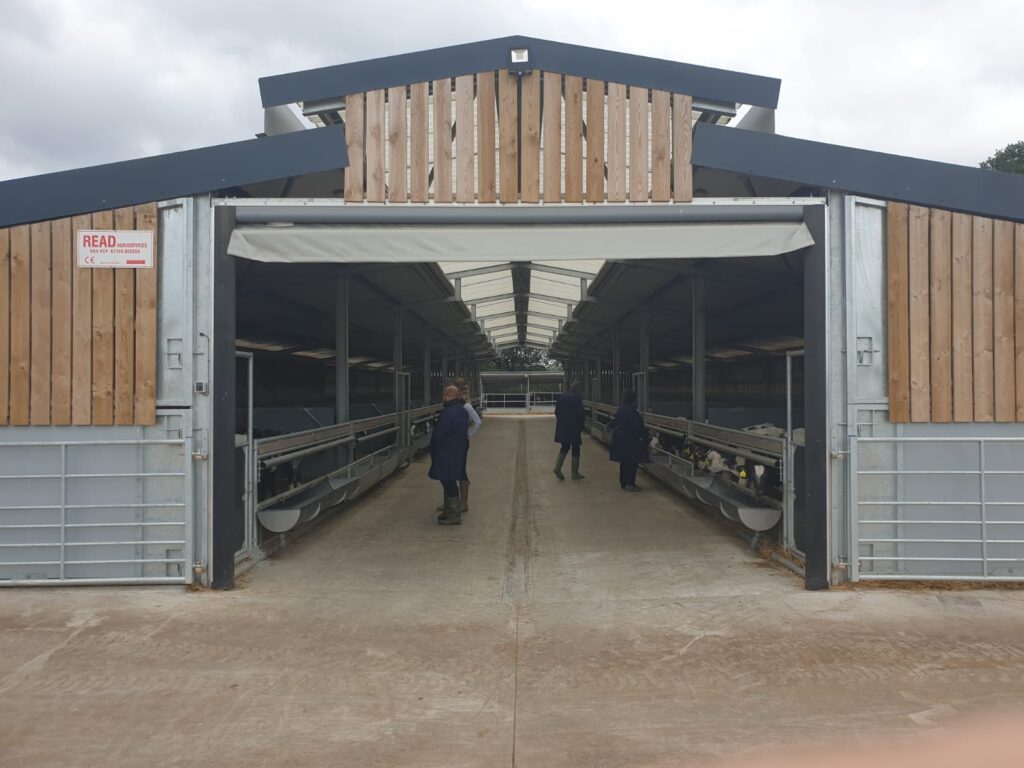
Such concerns are irrelevant for a semi-open sided livestock shed, but there is an energy demand associated with lighting and ventilation. While the use of more efficient lighting and ventilation in this instance will reduce the operational carbon of the building, an even greater benefit can be realised by good building design to maximise the use of natural daylight and ventilation (also better for the welfare of livestock).

Design for reduced CO2 emissions

As the impact of climate change becomes more apparent so the need to tackle it will become more urgent and efforts to reduce the carbon footprint of human activity will intensify.

This started in earnest in the UK at the start of the millennium with incremental changes to building regulations to reduce operational carbon and the greater use of environmental assessments, such as BREEAM, to grade buildings in terms of their overall environmental impact.

In parallel, documents such as the “Green Guide” will gather and disseminate data on the environmental impact of building elements and EPDs for construction products have become the norm.

However, with the UK government now committed to net zero, it is safe to assume that an even greater emphasis will need to be placed on the environmental design of buildings in future.

Likely changes can be grouped into three categories:

  • Improved energy efficiency to reduce operational carbon
  • Better use of more sustainable materials to reduce embodied carbon
  • Greater incorporation of renewable energy devices

Reductions in operational carbon are likely to be achieved by continuing recent trends aimed at minimising energy wastage from inefficient lighting, mechanical plant (heating, cooling and ventilation) and heat loss through the building envelope, but the emphasis of these reductions may change.

For example, as the thickness of roof and wall insulation has increased over recent years, emphasis switched from U-values to airtightness, since proportionately more heat was now being lost through leaky joints.

This change has resulted in modern houses that are theoretically very energy efficient, but uncomfortable for the occupants, who take matters into their own hands by opening the windows in the middle of winter while the heating is on. Needless to say, there is now a greater emphasis on human behaviour and control systems.

For unheated buildings, optimising lighting and ventilation are likely to be key, i.e., allowing as much daylight in as possible without too much solar gain leading to overheating.

As operational carbon is reduced, expect a greater emphasis to be placed on the embodied carbon of the building, with sustainable sourcing and the greater use of recycled materials becoming normal practice.

There could also be a move towards structural forms that minimise material weight at the expense of fabrication effort (e.g. lightweight trusses) and construction methods that reduce waste (e.g. offsite manufacturing – which is already standard practice for frame manufacturers).

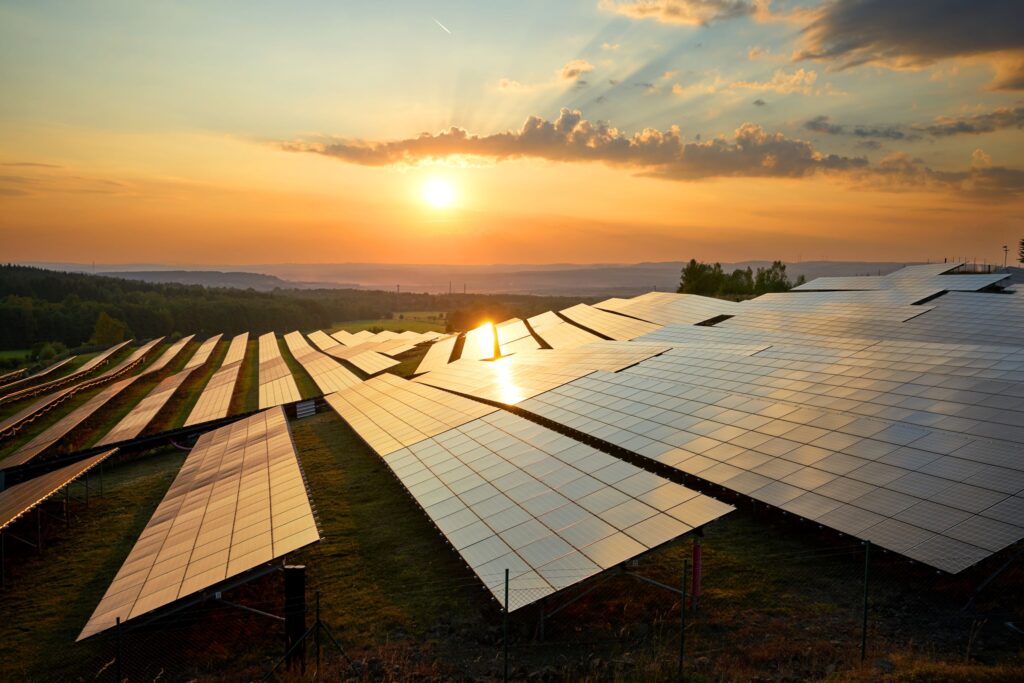
Finally, as demand for renewable electricity increases to charge all of those electric cars that we will soon be driving, it is likely that the trend to cover building roofs with photovoltaic (PV) arrays will pick up again, if the financial incentives are right. However, PVs add weight to structures and can potentially increase wind loading, so there may be implications for the design of the structure.

There are also options to harness the power of the sun to meet local energy needs, for example cladding grain stores with transpired solar collectors (steel sheets with tiny perforations) to collect hot air to dry the grain.

The consequences of climate change on buildings

One of the most shocking aspects of the recent IPCC report is that the impact of climate change is already apparent. We’ve been warned it’s going to get worse even if we slash carbon emission over the next couple of decades.

Given that all buildings have to be designed for what the Eurocodes call “climatic actions” (wind, snow and sometimes ice and thermal expansion), it should not come as a surprise if climate change results in more onerous design conditions for our buildings.

CEN (Europe’s standards organisation) is already considering how best to factor climate change into the Eurocodes, with the option of applying a scaling factor to snow and wind loads being considered.

It is also likely that the maximum temperature values used for calculating steel expansion (very important for bridges and railway track) will increase. This rise in peak temperatures will also increase the risk of buildings overheating.

Another consequence of climate change is likely to be heavier rainfall, requiring the redesign of gutters and drainage systems.

Conclusions

Climate change has arrived as a physical reality in the form of heat waves and storms and as a political priority. In both senses it will have consequences for the way buildings are constructed and operated.

With buildings accounting for 17% of the UK’s greenhouse gas emissions, reducing the energy demand of buildings should be a priority for our sector as we seek to limit the impact of climate change and minimise the harm to our planet.

Dr Martin Heywood
RIDBA Technical Consultant

Changes to cattle systems begin to bite

Hydor_Keens-38-resized

Although the subject of heat stress has been mentioned before, some of the predictable changes in cattle systems in the UK are beginning to bite on animal health and welfare.

The first change is that as cattle become more productive, they process more energy and need to dump more sensible heat to maintain energy balance. The second is that increased production requires increased moisture throughput, with a high-yielding dairy cow consuming water in excess of 100 litres per day.

This means a building with 200 dairy cows will have a throughput of more than 20,000 litres of water per day, with at least 16,000 litres of that being excreted back into the system.

The final change is that our cows are increasingly likely to be housed all year round, so livestock building systems have to operate at ambient temperatures above 15c.

One question that has bounced around the livestock building sector for more than ten years is: “Is there a requirement for insulated roof sheeting and can the additional cost be justified?”. My response has been that, in terms of hard data, we don’t know.

Our understanding of physiology and relevant meteorology can provide an estimation of the risk from heat stress, in the same way, location data and meteorology can give risk guidance for wind loading on structures. We need more data.

Just over 18 months on from the emergence of Covid-19, on-farm meetings in the UK have begun again and it was a pleasure to be working in the south-west of England recently.

The focus was how to manage heat stress in dairy cows, and the sun duly shone providing air temperatures above 24c from mid-morning until mid-evening.

My contribution was to use building design to maximise wind-driven ventilation without losing control of air speed in the winter months and ensuring there is no restriction of ventilation by stack effect.

The progressive information came from Mark Scott, of Cargill, which like the meeting sponsors Crediton Milling Company is an animal nutrition company, supplying the energy in aspect of our cattle systems.

The question of return on investment from adding costs to our cattle buildings is answered more easily if we know the costs of a system being out of balance. Mark and his colleagues at Cargil have installed temperature and humidity sensors on dairy units around the UK which provide constant monitoring of the thermal humidity index (THI).

This data is useful because there is a temptation to think that our UK air temperatures are seldom stressful, with air temperature data from overseas significantly higher than typical UK summer temperatures in cattle buildings.

In fact, it is more useful to adopt THI as a measure of thermal conditions experienced by cattle than air temperatures because, as air temperatures rise, cattle increasingly rely on dumping moisture from the body into the environment.

Moisture loss by respiration increases two-fold when air temperature increases from 12c to 24c.

This works well in hot, dry climates, but is not so easy in a maritime climate like the UK, with relatively high but normal air humidities. It is hard to dump energy as moisture in a damp atmosphere.

The data collected from 26 farms in the UK can be accessed at www.weatherdatauk.provimi.eu, with the primary observation that from south-west Scotland to south-west England, there are a significant number of days where cattle reproduction and performance is being limited by THI.

Managing heat stress on UK cattle units

Where the number of days per year of THI above 65 is very low, the opportunity for return on investment will also be low. However, the evidence that UK cows are becoming heat stressed is clear.

Managing heat stress can be done at the design stage of buildings and also retrospectively. For example:

  • Drainage slopes prevent the accumulation of moisture.
  • Sidewall cladding to provide wind driven air movement without losing control of winter air speeds.
  • No restriction of the stack effect by the inlets and outlet areas.
  • Roof material.
  • Roof slopes.
  • Water troughs.

The role of the wind is so important in managing ventilation and thereby energy and moisture management in a cattle building, that the location of individual buildings has a critical impact. It is tempting to think our weather is unpredictable, but the facts prove the opposite. It is useful to refer to local meteorological data for a level of predictability about the impact of weather on a building.

Even with drainage and natural ventilation optimised there will still be predictable benefits from helping cows stay cooler. Nutritionists have a role by providing products that change pathways of energy metabolism and can help to reduce body temperatures by 1-2c. Remember, access to clean and cool water helps too.

After that, our systems need more help. Mechanical ventilation is used extensively around the world to cool livestock by increasing air speed across their bodies and increasing the rate of heat loss. As long as the airborne heat and moisture entrained in the fan-driven air leaves the building and is not allowed to accumulate, cow health and welfare will benefit.

The Hot Cows Road Show in July included presentations from Robin Hibberd, of Hydor, on the requirements of and benefits from mechanical ventilation. The main requirement for managing heat stress is to provide large volumes of air across the backs of as many cattle in the building as possible. Some general rules are:

  • Locate fans to move air in same direction as predominant wind direction, where possible.
  • Locate fans in series to ensure the moving air column does not accumulate inside buildings.
  • Locate fans so that air flow passes around the cattle, not above.
  • Balance fan types and capacity to available power supply and running costs.
  • Persuade the client that the cost of automatic control, probably for temperature and humidity, provides good value.

The addition of mechanical ventilation also provides the possibility of adding water to livestock systems and increasing the rate of energy from a body by evaporation. Spraying of water – or misting – may be particularly valuable in THI hot spots such as collecting yards, but never where ventilation is compromised.

So, I return to the original question: “Is there a requirement for insulated roof sheets?”. The current information on THI in UK cattle buildings strongly suggests there is a need, and that return on investment will depend on the scale of current losses.

Jamie Robertson
RIDBA Livestock Consultant

2021 RIDBA Building Awards: Celebrating the best in rural and industrial buildings

CA20162-for-press-release-scaled

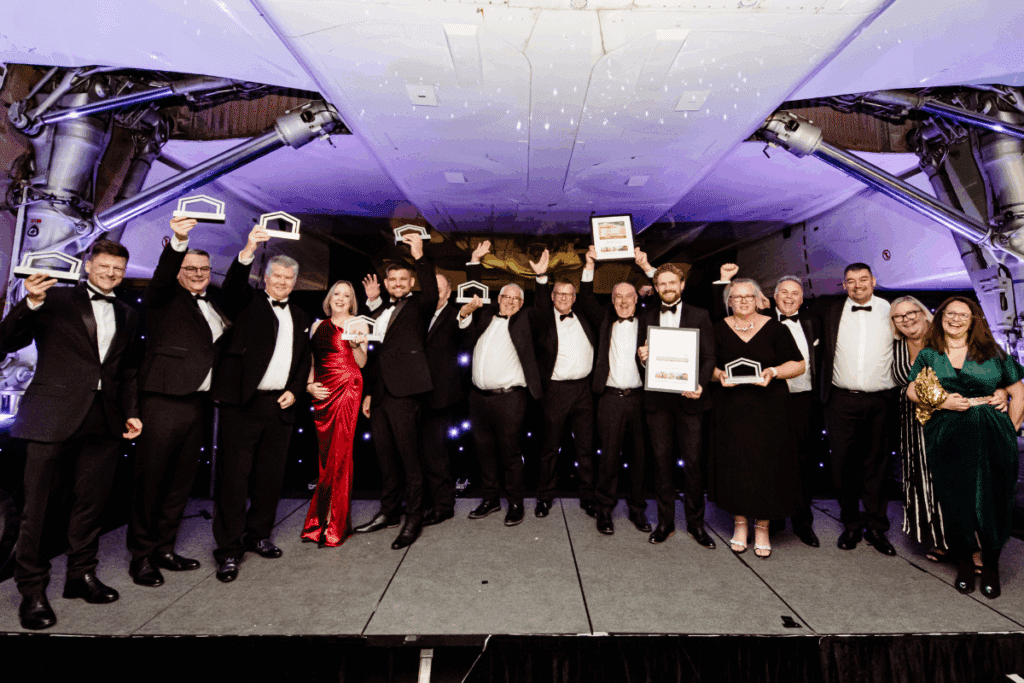
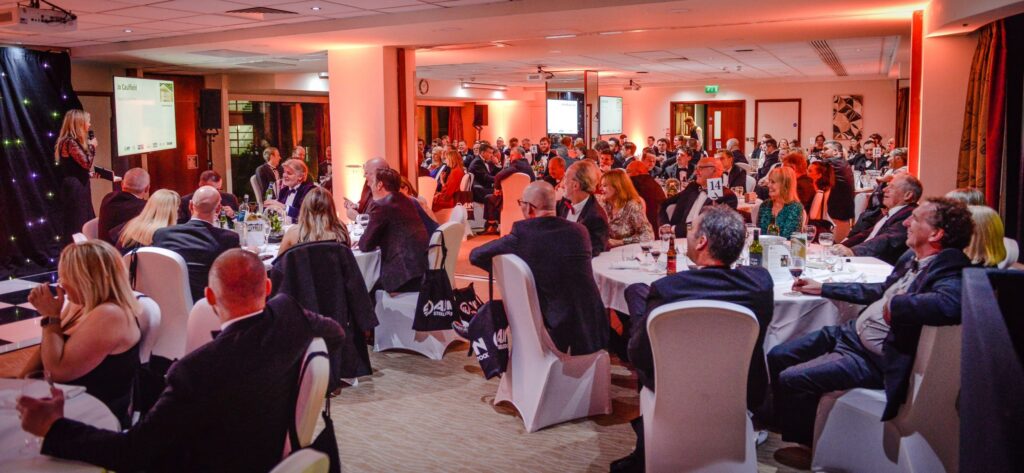
The Rural and Industrial Design and Building Association (RIDBA) hosted the 2021 RIDBA Building Awards at the Macdonald Manchester Hotel.

Hundreds of guests celebrated the fantastic work of RIDBA members from all over the UK on September 30, 2021.

Comedian and writer Jo Caulfield hosted RIDBA’s flagship event which saw prizes and commendations handed out to brilliant projects across eight categories.

RIDBA Chairman, Neil Fox, said:

“I’m delighted that at long last we were able to celebrate the best in rural and industrial buildings.

“Once again RIDBA members have shown the sheer quality of their work and some of these projects have been completed under extraordinary circumstances. I would like to congratulate each and every finalist.

“Finally, I would like to thank all of our sponsors, without their support, these awards would not have been possible.

Net-zero carbon-rated Lingwood House was named this year’s overall winner. The striking office is just six metres from a railway line which meant RIDBA member M D Anthony had to be particularly versatile in their approach during the design and construction phases.

Luxury residential property Ben Jurin Islay Road by Wareing Buildings was highly commended for the complexity of its steelwork and its aesthetics.

The 2021 RIDBA Building Awards were sponsored by AJN Steelstock, Joseph Ash Galvanizing, Kingspan, Steadmans, Eternit, STRUMIS and media partner, Farming Monthly.

The chosen charity was the Lily Mae Foundation. The foundation supports parents and families after a stillbirth, neonatal death, miscarriage or medical termination. RIDBA would like to thank guests for their generous donations.

Please click here to download the press release. 

Jo Caulfield to host RIDBA Building Awards

RIDBA is delighted to announce that comedian and writer, Jo Caulfield, will host this year’s RIDBA Building Awards.

Jo has worked on some of the biggest shows and with some of the biggest names in British comedy. She has appeared on programmes such as Have I Got News For You, Mock The Week and Never Mind The Buzzcocks.

RIDBA’s flagship event will take place at the Macdonald Hotel, in Manchester, on Thursday, September 30. Please click here to view the shortlisted companies.

RIDBA would like to take this opportunity to thank its event sponsors AJN Steelstock, Joseph Ash Galvanizing, Kingspan, Steadmans, Hadley Group, Eternit, STRUMIS and our media partner, Farming Monthly.

New Secretariat begins work

The Association Management Company took over from Build UK at the beginning of July and has wasted no time in getting down to work.

Joe Chalk has been appointed as general manager and is overseeing the implementation of the association’s strategy and its day-to-day running.

He will be supported by marketing executive Daniel Surey who is responsible for communications, including the RIDBA Journal, while membership support coordinator Sam Reed will be on hand to help with accounts and membership enquiries.

Among one of the first tasks for the new team is to ensure the smooth running of the RIDBA Awards which will take place at the Macdonald Hotel, in Manchester, in September. Attentions are also on the next edition of the RIDBA Journal, which is also just around the corner, as are membership subscription renewals.

Joe said: “We worked closely with the Board and Build UK in the months leading up to July to ensure we hit the ground running.

“We have already received lots of welcoming calls and emails from members, and we look forward to working with RIDBA in the weeks, months and years ahead.”

Your new RIDBA contact details are:

  • 01379 788036
  • [email protected]
  • 10B Red House Yard, Gislingham Road, Thornham Magna, Eye, Suffolk, IP23 8HH

Arwel Davies, Adeilad Cladding Limited

Hot-air-balloon

RIDBA is saddened to learn of the passing of Arwel Davies, of Adeilad Cladding Ltd (Ad-Clad), aged 40.

Ad-Clad, based in Llanwdra, Carmarthenshire supplies roofing materials for agricultural, industrial and domestic buildings.

The company was established in 1977 by Arwel’s father, Eirian Davies, who had a keen interest in hot air balloons. Arwel followed in his father’s footsteps by becoming a qualified balloon pilot and acquired a new hot air balloon showcasing Ad-Clad branding in 2013.

Away from work, Arwel spent many years as a player and coach at Llandovery Rugby Club.

Everyone at RIDBA would like to take this opportunity to offer their sympathies to Arwel’s family and friends.